As electric vehicles (EVs) become increasingly popular, understanding how EV charging works is more important than ever. Terms like power (kW), current (amps), charging speed, and charging standards can seem confusing at first. This guide breaks down these key concepts in a simple and practical way, helping you better understand how EV charging systems operate and how to choose the right solution.
1. What Is Charging Power (kW)?
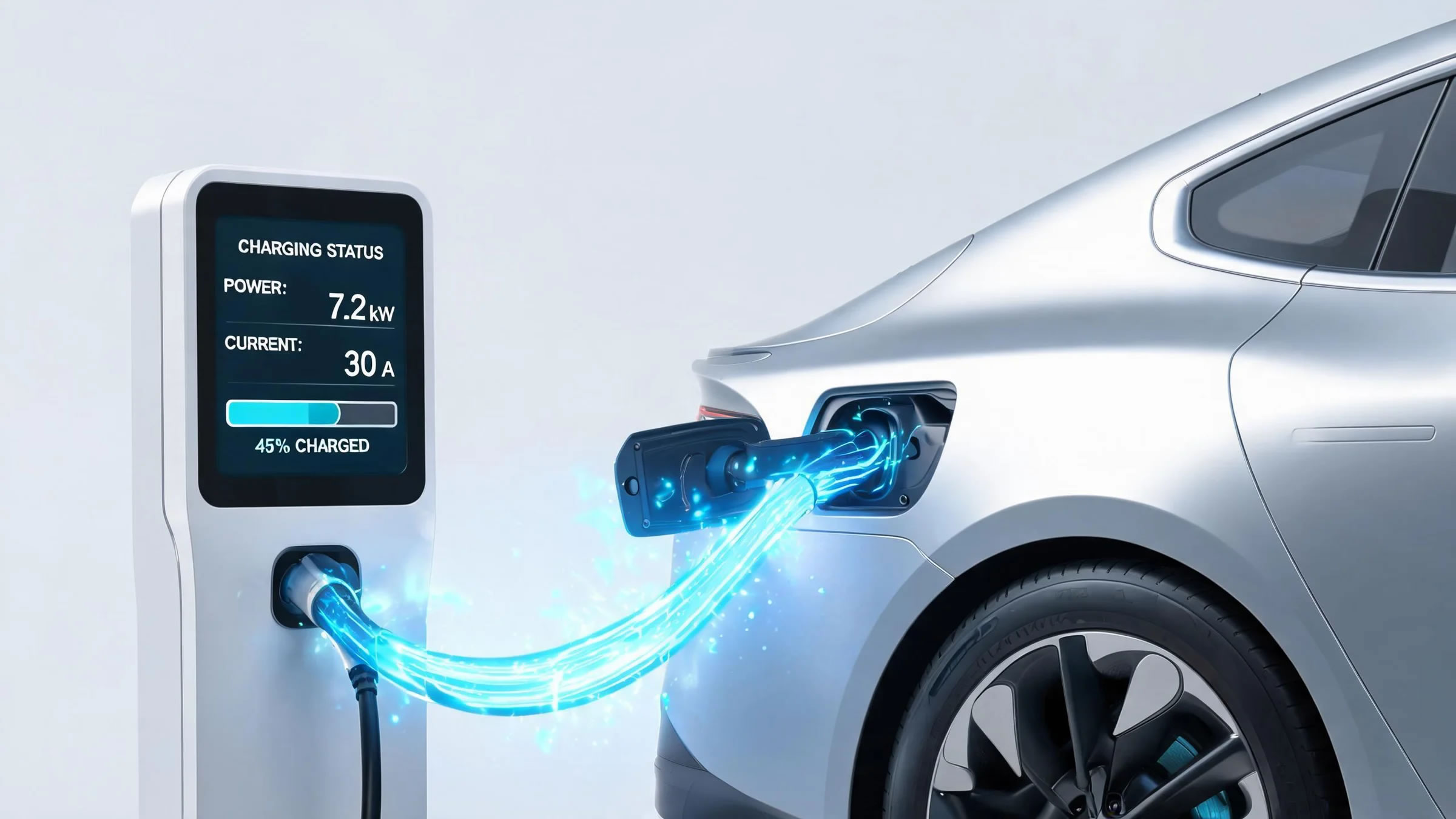
Charging power, measured in kilowatts (kW), indicates how fast energy is delivered to an electric vehicle. The higher the power, the faster the charging process.
For example:
- A 7 kW charger is typically used in homes or small businesses
- A 22 kW charger is common in commercial AC charging
- A 120 kW+ charger is considered DC fast charging
Charging power is one of the most important factors affecting charging speed.
2. What Is Electric Current (Amps)?
Electric current, measured in amperes (A), represents the flow of electricity from the charger to the vehicle.
The relationship between power, voltage, and current is:
Power (kW) = Voltage (V) × Current (A) ÷ 1000
This means higher current can increase charging power, but only if the vehicle and charger both support it.
3. What Determines Charging Speed?
Charging speed is not determined by a single factor. It depends on:
- Charger power (kW)
- Vehicle battery capacity
- Vehicle’s onboard charger or DC compatibility
- Battery state of charge (charging slows after ~80%)
For example, even if you use a 150 kW fast charger, your vehicle may only accept 80 kW, limiting the actual charging speed.
4. AC vs DC Charging
There are two main types of EV charging:
AC Charging (Alternating Current)
- Power typically ranges from 3.7 kW to 22 kW
- Common for home and workplace charging
- Uses the vehicle’s onboard charger to convert AC to DC
DC Charging (Direct Current)
- Power ranges from 30 kW to 350 kW+
- Used in fast-charging stations
- Supplies power directly to the battery, bypassing onboard conversion
DC charging is significantly faster but requires more advanced infrastructure.
5. Global Charging Standards
Different regions use different EV charging standards:
- CCS (Combined Charging System) – Widely used in Europe and North America
- CHAdeMO – Common in Japan and some older EV models
- GB/T – Standard used in China
Understanding these standards ensures compatibility between vehicles and charging stations.
EV charging may seem complex at first, but understanding the basics of power, current, charging speed, and standards makes it much easier to navigate. As technology continues to evolve, charging will become faster, more efficient, and more accessible. Whether you are a new EV owner or a business exploring charging solutions, having a solid understanding of these fundamentals will help you make smarter decisions in the growing electric mobility ecosystem.
 July 30, 2026