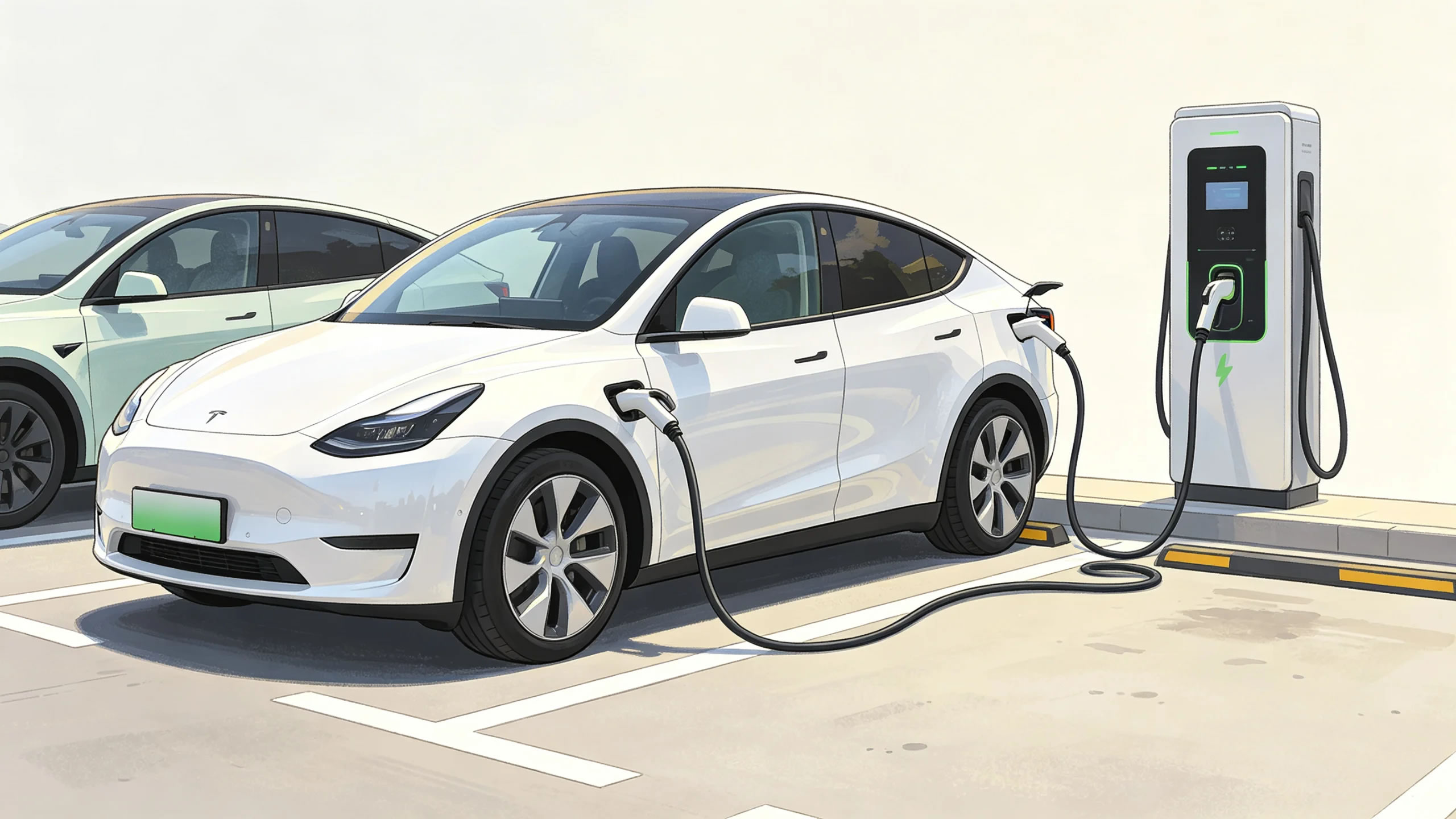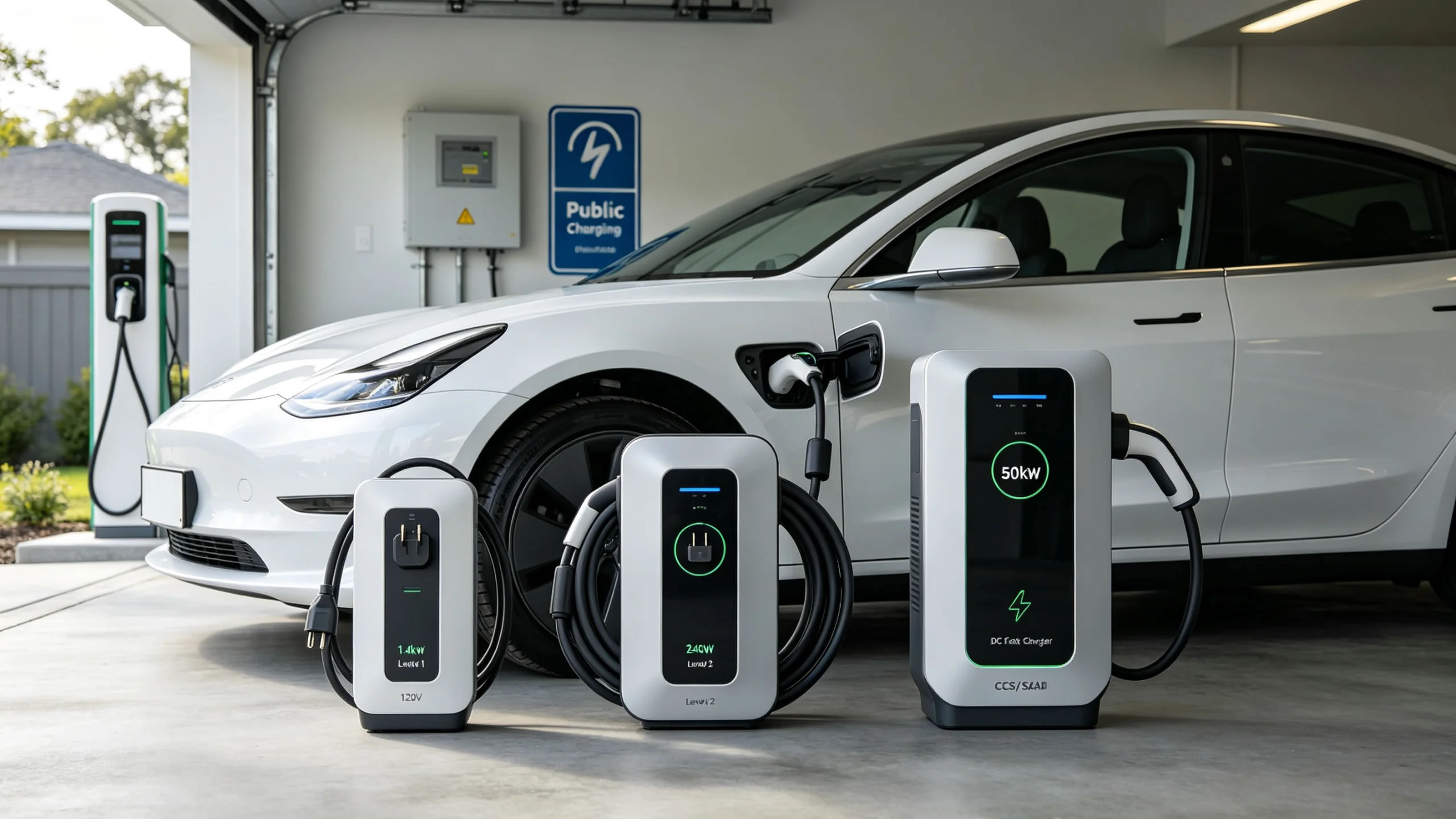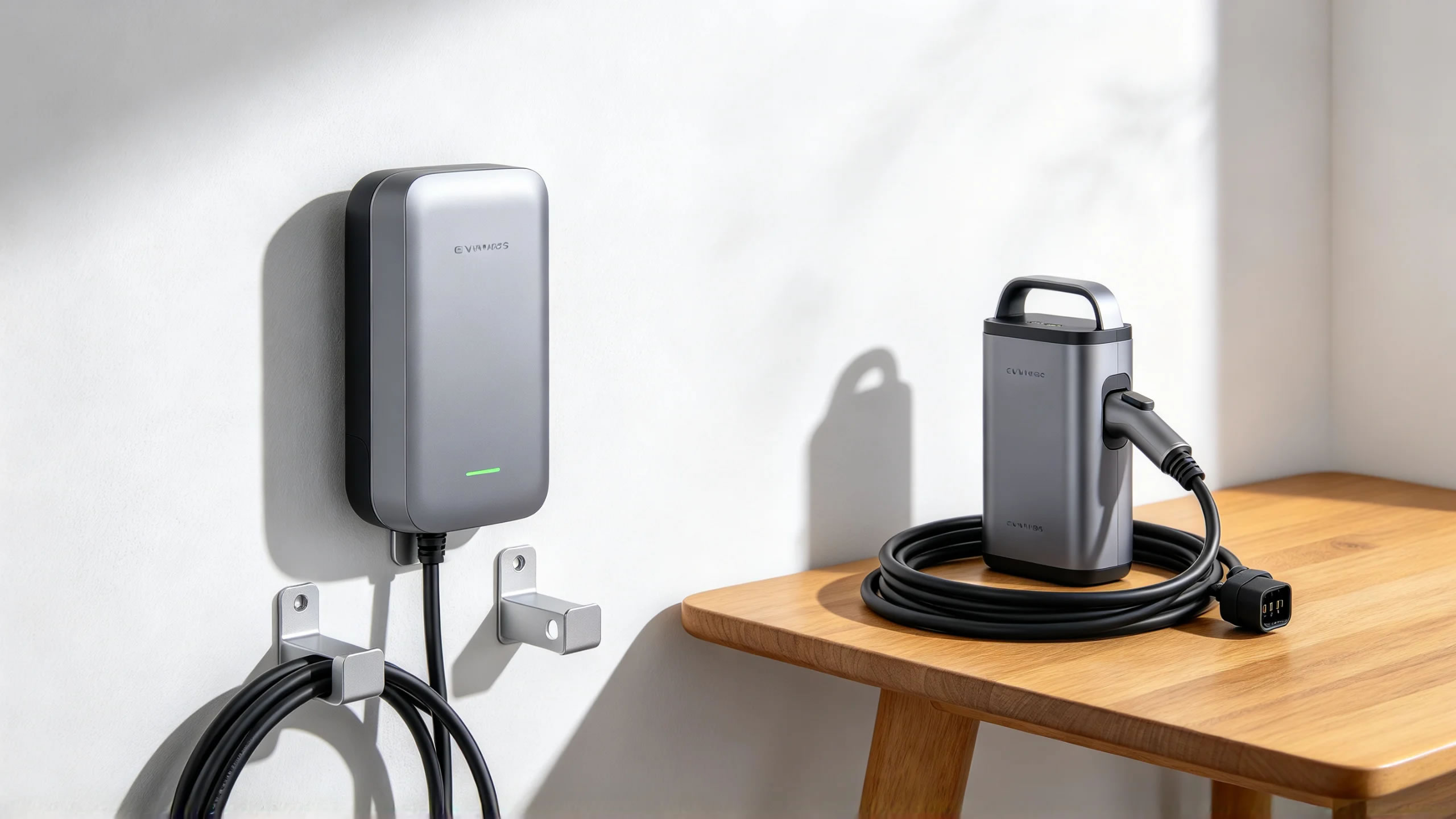
EV owners have several ways to charge their vehicles at home or on the road. Two common options are wall-mounted EV chargers and portable EV chargers.
Both can provide useful charging solutions, but they are designed for different situations.
Understanding the differences can help EV owners choose a charging solution that matches their driving habits, parking situation, and need for flexibility.
1. What Is a Wall-Mounted EV Charger?
A wall-mounted EV charger is permanently installed at a specific location, such as a garage, driveway, or private parking area.
It is normally connected to a dedicated electrical circuit and is designed for regular charging.
Common features may include:
- Fixed installation
- Dedicated charging circuit
- Higher and more stable charging power
- Cable management
- Wi-Fi or app connectivity on some models
- Scheduled charging
- Energy monitoring
Because the charger remains in one location, it is particularly suitable for drivers who regularly park in the same place.
2. What Is a Portable EV Charger?
A portable EV charger is designed to be carried and used at different locations.
Depending on the product, it may connect to a suitable electrical outlet and provide charging through a cable with an integrated control and protection device.
Portable chargers can be useful for:
- Travel
- Temporary charging locations
- Secondary vehicles
- Drivers without a fixed charging location
- Emergency or backup charging
Their main advantage is flexibility.
3. Charging Power
Charging power varies depending on the specific product and electrical supply.
A permanently installed wall charger may support higher charging power because it can be connected to a dedicated electrical circuit.
Portable chargers often operate at lower power, although some models can support higher currents when connected to a suitable electrical supply.
The important point is that charging power depends on more than the charger itself.
The vehicle, electrical outlet, cable, and electrical installation must all be capable of supporting the selected power.
4. Installation
Wall-mounted chargers generally require more installation work.
A qualified professional may need to assess:
- Electrical capacity
- Wiring
- Circuit protection
- Grounding
- Mounting location
Once installed, however, the charger is ready for regular use.
Portable chargers normally require less permanent installation because they are designed to connect to an existing suitable power source.
This makes them easier to move, but the available charging power may depend heavily on the outlet and electrical system being used.
5. Convenience
For daily home charging, a wall-mounted charger can be very convenient.
The charger is always available at the parking location, and the cable can often be stored neatly near the vehicle.
A portable charger requires more handling. The user needs to take it out, connect it, and store it again after charging.
For someone who charges in the same place every day, permanent installation may be more convenient.
For someone who frequently changes locations, portability may be more valuable.
6. Which One Is Better for Travel?
Portable chargers have an obvious advantage when traveling.
A driver may encounter locations where public charging is unavailable or inconvenient. Having a compatible portable charger can provide an additional charging option.
However, portable charging should only be used with electrical outlets that are suitable for EV charging.
Do not assume that every household outlet can safely support continuous EV charging at high current.
7. Smart Features
Many wall-mounted chargers offer advanced functions such as:
- Charging schedules
- Mobile app control
- Energy monitoring
- Remote control
- Dynamic load management
Some portable chargers also provide adjustable current settings and basic charging information.
If smart charging features are important to you, compare the actual functions of individual products rather than assuming all chargers provide the same capabilities.
Quick Comparison
| Feature | Wall-Mounted Charger | Portable Charger |
|---|---|---|
| Installation | Permanent | Minimal or temporary |
| Mobility | Low | High |
| Daily home charging | Very suitable | Suitable |
| Travel | Less convenient | Very suitable |
| Charging power | Often higher | Depends on model and outlet |
| Convenience | High for fixed parking | High for flexible use |
| Smart features | Common on modern models | Varies |
| Best for | Regular charging location | Flexible or backup charging |
8. Which Should You Choose?
A wall-mounted charger may be the better choice if:
- You have private parking
- You charge regularly at home
- You want a permanent charging solution
- Your electrical system supports the desired power
- You want smart charging features
A portable charger may be more suitable if:
- You travel frequently
- You need a backup charging option
- You use different parking locations
- Permanent installation is not practical
- Flexibility is more important than charging power
Some EV owners may even use both: a wall-mounted charger for everyday charging and a portable charger as a backup or travel solution.
Wall-mounted and portable EV chargers are not necessarily competing products. They solve different charging needs.
A wall-mounted charger is generally designed for convenient, regular charging at a fixed location, while a portable charger provides greater flexibility for travel and temporary charging.
The best choice depends on where you normally park, how often you travel, your vehicle's charging capability, and the available electrical supply.
Choosing based on your actual usage is more important than simply selecting the most powerful or most feature-rich charger.
 October 5, 2026