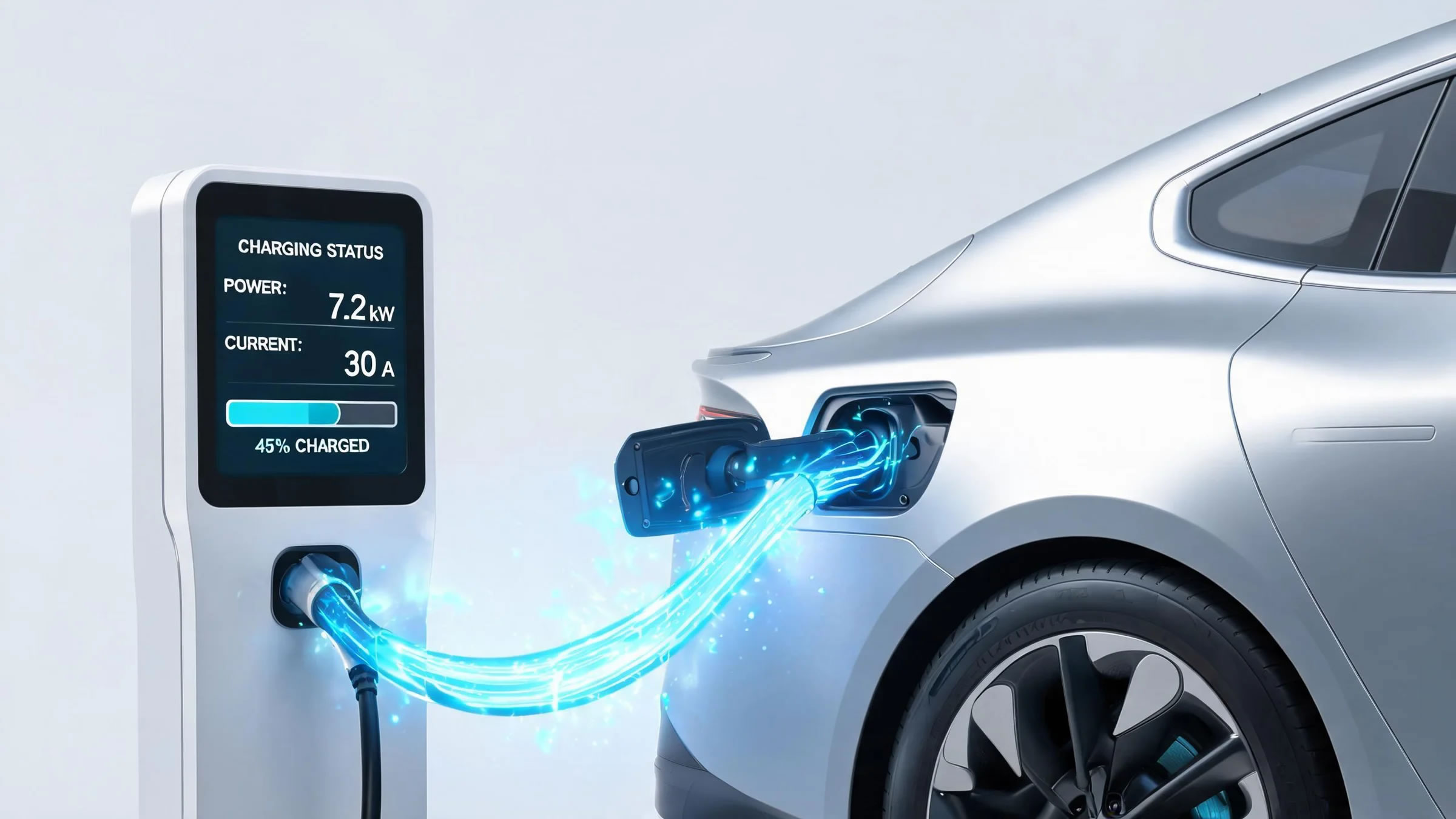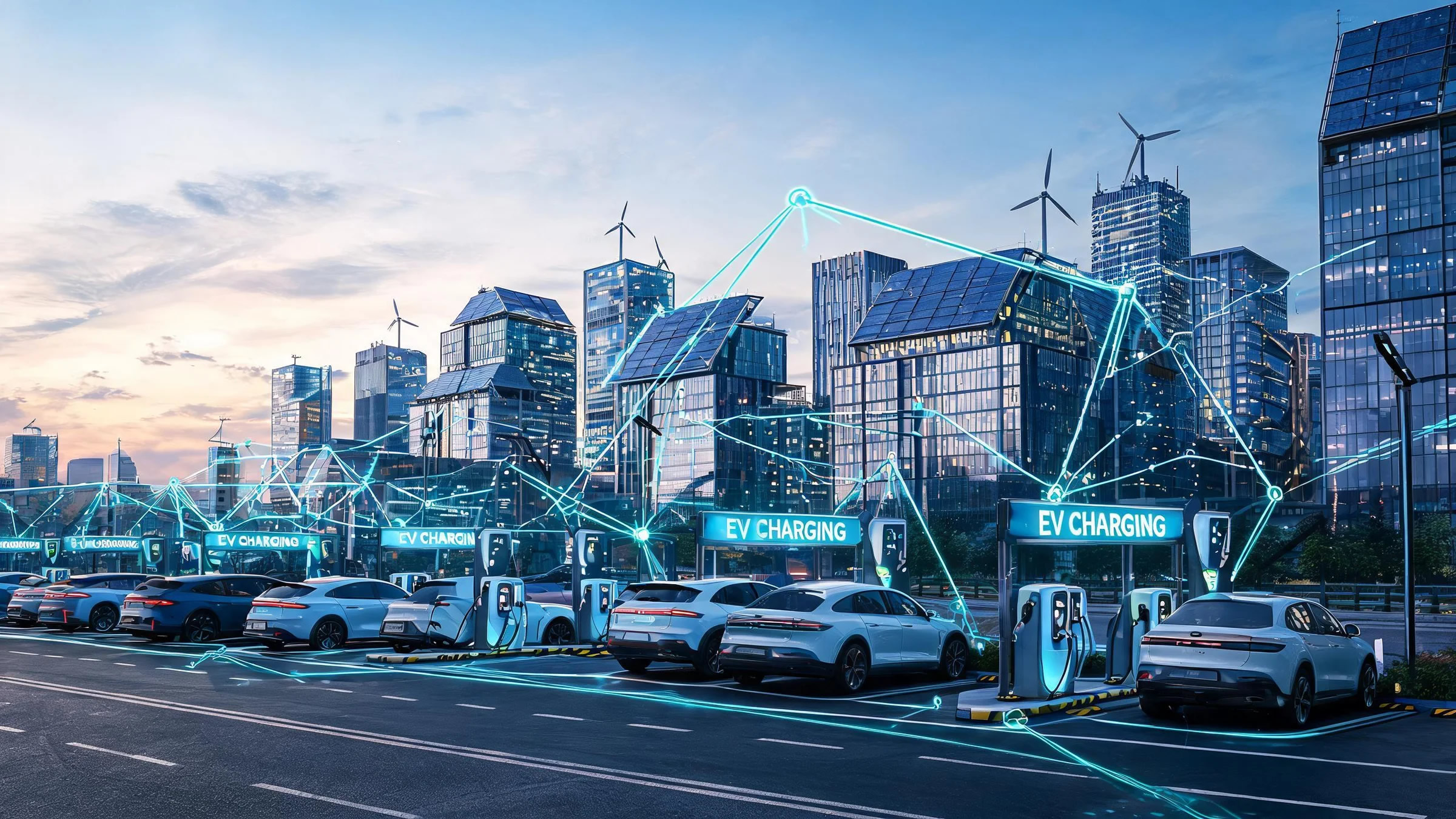
As electric vehicles continue to grow worldwide, EV charging technology has become a critical part of the modern transportation ecosystem. Many people understand that charging stations provide electricity to vehicles, but few know what happens behind the charging cable. From power conversion and communication systems to safety protection and intelligent management, modern EV chargers combine multiple technologies to deliver a safe, efficient, and reliable charging experience.
This article explains how EV chargers work, the key components inside a charging system, and how technology is shaping the future of electric mobility.
1. The Basic Principle of EV Charging
At the most basic level, an EV charger transfers electrical energy from the power grid to the vehicle battery.
The charging process includes several steps:
Step 1: Power Input
The charger receives electricity from the grid.
Depending on the charging type:
- AC chargers receive alternating current directly from the grid
- DC fast chargers convert grid power into direct current before sending it to the battery
Step 2: Power Conversion
Electric vehicle batteries store energy as direct current (DC).
However, most electrical grids provide alternating current (AC).
Therefore:
- AC charging relies on the vehicle's onboard charger to convert AC into DC
- DC fast charging performs this conversion inside the charging station
This difference is why DC chargers can provide much higher charging speeds.
Step 3: Energy Transfer to the Battery
After conversion, electricity flows through the charging connector into the vehicle battery.
During this process, the charger and vehicle continuously communicate to control:
- Voltage
- Current
- Temperature
- Charging speed
- Battery protection
This intelligent communication ensures efficient and safe charging.
2. Main Components Inside an EV Charger
A modern EV charger is not just a power outlet. It is a complex electronic system.
1. Power Module
The power module is the core component of the charger.
Its functions include:
- AC/DC conversion
- Voltage regulation
- Current control
- Energy efficiency management
High-quality power modules help improve charging stability and reduce energy loss.
2. Charging Controller
The controller acts as the "brain" of the charging station.
It manages:
- User authentication
- Charging start and stop commands
- Communication with vehicles
- Data collection
- Remote monitoring
Smart chargers use advanced controllers to connect with cloud platforms.
3. Communication System
Modern EV chargers communicate with both vehicles and management platforms.
Vehicle communication allows the charger to know:
- Battery status
- Maximum charging capacity
- Charging requirements
Cloud communication enables:
- Remote operation
- Fault monitoring
- Payment management
- Usage statistics
4. Safety Protection System
Safety is one of the most important parts of EV charging technology.
Modern chargers include multiple protection functions:
Overcurrent Protection
Stops charging when electrical current exceeds safe limits.
Overvoltage Protection
Prevents excessive voltage from damaging equipment.
Leakage Protection
Detects abnormal current leakage and disconnects power.
Temperature Monitoring
Automatically adjusts charging power based on temperature conditions.
These technologies protect both users and vehicles.
3. Smart Charging Technology
The next generation of EV chargers is becoming increasingly intelligent.
Smart charging systems can:
Optimize Energy Usage
Charging can be scheduled during low-demand periods to reduce electricity costs.
Balance Grid Load
Multiple chargers can automatically adjust power distribution.
Support Remote Management
Operators can monitor thousands of charging stations through cloud platforms.
Improve User Experience
Users can check:
- Charging progress
- Available stations
- Charging history
- Payment information
4. AC Charging vs DC Fast Charging Technology
AC Charging Technology
AC chargers are commonly used in:
- Homes
- Offices
- Shopping centers
Advantages:
- Lower installation cost
- Simple structure
- Suitable for long parking periods
Typical power range:
3.7kW – 22kW
DC Fast Charging Technology
DC chargers are mainly used in:
- Highway stations
- Commercial charging hubs
- Public fast-charging networks
Advantages:
- Much faster charging speed
- Suitable for high-frequency usage
Typical power range:
30kW – 350kW+
5. The Future of EV Charging Technology
The EV charging industry is moving toward a smarter and more connected future.
Future technologies include:
Ultra-Fast Charging
Higher power systems will continue reducing charging time.
Vehicle-to-Grid (V2G)
Electric vehicles may become mobile energy storage units, returning electricity to the grid when needed.
Artificial Intelligence Management
AI will optimize charging schedules, maintenance, and energy distribution.
Renewable Energy Integration
Solar and other renewable energy sources will increasingly combine with charging infrastructure.
EV chargers are becoming much more than simple energy delivery devices. Behind every charging session is a combination of power electronics, communication technology, intelligent software, and safety systems.
Understanding how EV charging technology works helps consumers, businesses, and investors better understand the future of electric mobility. As global EV adoption accelerates, advanced charging infrastructure will become one of the most important foundations supporting the transition toward cleaner transportation.
 August 3, 2026