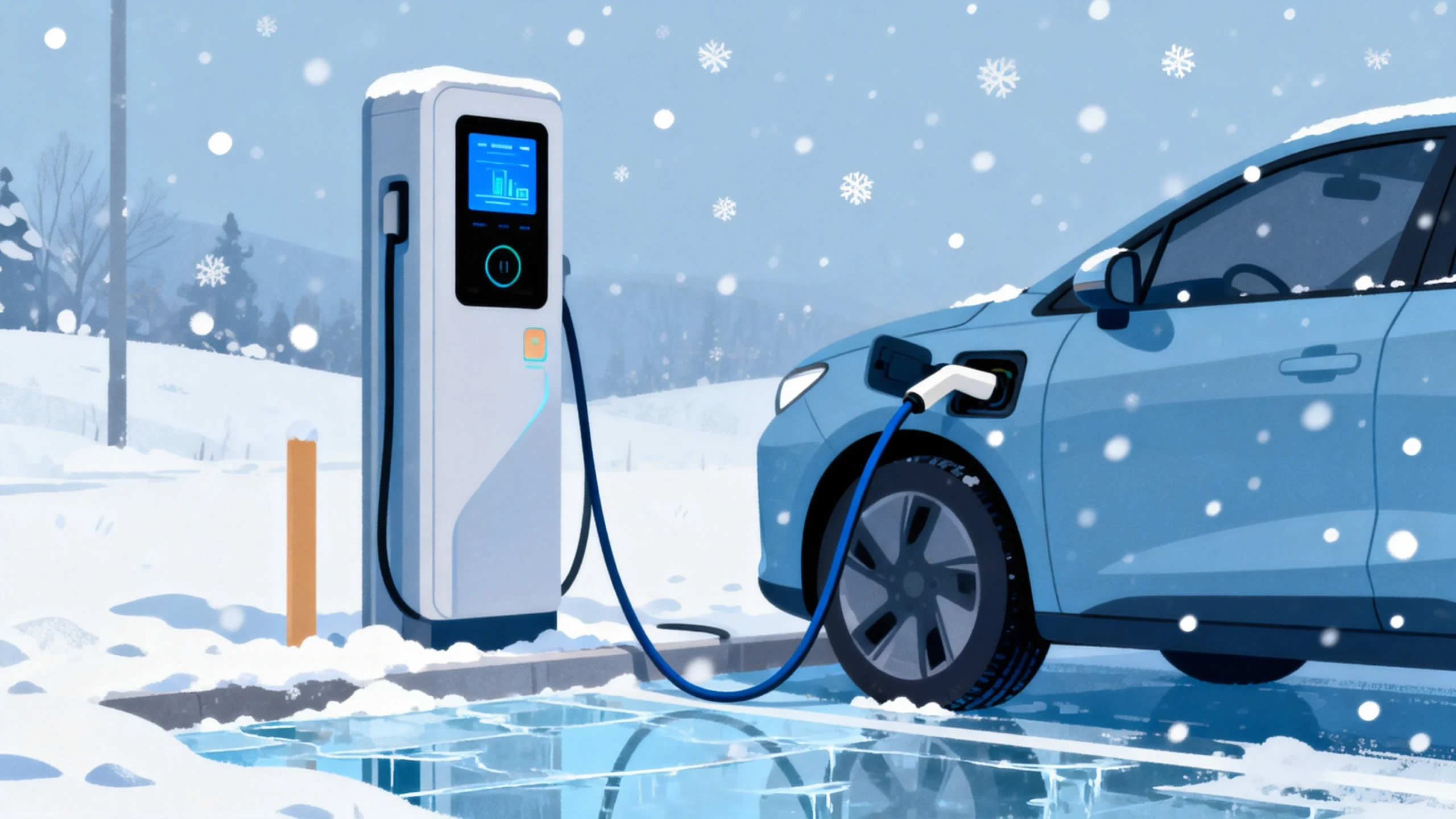
Cold weather can affect how far an electric vehicle travels, how quickly its battery charges, and how much energy it uses for heating. For EV owners, understanding these changes can make winter driving more comfortable and predictable.
The good news is that a few simple habits can help you manage charging more efficiently during colder months.
1. Why Does Cold Weather Affect EV Charging?
Electric vehicles use lithium-ion batteries, which perform differently depending on temperature. In cold conditions, the battery's internal chemical processes slow down, making it harder to accept energy quickly.
As a result, you may notice:
-
Reduced driving range
-
Slower DC fast charging
-
More energy used for cabin heating
-
Longer time needed to bring the battery to an ideal operating temperature
The impact varies by vehicle, battery design, temperature, driving conditions, and heating system. Cold weather does not affect every EV in exactly the same way.
2. Charge Your EV Before the Battery Gets Too Low
In winter, it is sensible to plan charging with a little more flexibility.
Cold weather can increase energy consumption, and unexpected traffic or detours may require additional range. Avoid relying on the last few percentage points of battery charge to reach a station.
If you charge at home, consider starting the day with enough energy for your planned journey plus a reasonable reserve. For longer trips, identify backup charging stations before setting off.
3. Precondition the Battery Before Fast Charging
Some electric vehicles support battery preconditioning, which prepares the battery for charging by bringing it closer to a suitable temperature.
On compatible vehicles, selecting a DC fast charger as the navigation destination may automatically initiate battery preconditioning. Other models may offer a manual setting.
When available, this feature can help improve charging performance in cold conditions.
Check your vehicle's manual to understand how preconditioning works. It may consume some energy, but it can also help the battery accept charge more efficiently once you arrive.
4. Use Cabin Preheating When Possible
Heating the cabin requires energy, which can reduce the distance your EV can travel.
If your vehicle supports scheduled departure or remote climate control, preheating the cabin while the vehicle is connected to a suitable charger can reduce the amount of battery energy used for initial heating during the drive.
You can also consider using seat heaters or steering-wheel heaters, if equipped, because they may provide personal warmth with less energy than heating the entire cabin.
Actual energy savings depend on the vehicle and conditions.
5. Why Is DC Fast Charging Slower in Winter?
DC fast charging power depends on several factors, including charger capacity, battery temperature, battery state of charge, and the vehicle's charging limits.
When the battery is cold, the vehicle may restrict charging power to protect the battery. This means that connecting to a high-power charger does not guarantee that the vehicle will charge at its maximum advertised speed.
To improve your charging experience:
-
Precondition the battery if your vehicle supports it.
-
Follow the vehicle's recommended charging procedure.
-
Plan extra time for winter charging stops.
-
Remember that charging power may decrease as the battery fills.
If charging is slower than expected, it does not necessarily mean the charger is faulty.
6. Should You Keep Your EV Plugged In Overnight?
If you have access to home charging, connecting your EV overnight can be convenient during winter.
Depending on your vehicle's settings, scheduled charging and preconditioning may help you prepare the battery and cabin before departure.
However, follow the manufacturer's guidance for charging limits, battery care, and cold-weather operation. Avoid using damaged cables, unsuitable outlets, or charging equipment that is not rated for the conditions.
For outdoor charging, make sure connectors are handled according to the equipment instructions and kept free of excessive moisture, ice, and debris.
7. Does Cold Weather Damage the Battery?
Normal winter use does not automatically damage an EV battery. Battery management systems are designed to monitor operating conditions and limit charging or power when necessary.
Nevertheless, charging a very cold battery at high power may be restricted by the vehicle to protect battery health.
For everyday use, follow the manufacturer's recommendations for battery charge limits and storage. If the vehicle will remain parked for an extended period in freezing conditions, consult its manual for suitable battery and parking settings.
8. A Simple Winter EV Charging Checklist
Before driving in cold weather:
-
Check your battery level and estimated driving range.
-
Plan charging stops for longer journeys.
-
Use battery preconditioning if available.
-
Preheat the cabin while plugged in when practical.
-
Allow extra time for charging.
-
Check tire pressure and weather conditions.
-
Use charging equipment suitable for the environment.
Winter changes the way an electric vehicle uses and accepts energy, but it does not have to make EV ownership difficult.
The most useful habits are to plan for reduced range, prepare the battery before fast charging when possible, use cabin preheating strategically, and allow extra time during colder journeys.
Understanding these factors helps you make better charging decisions and enjoy a more predictable driving experience throughout the winter.
 October 16, 2026