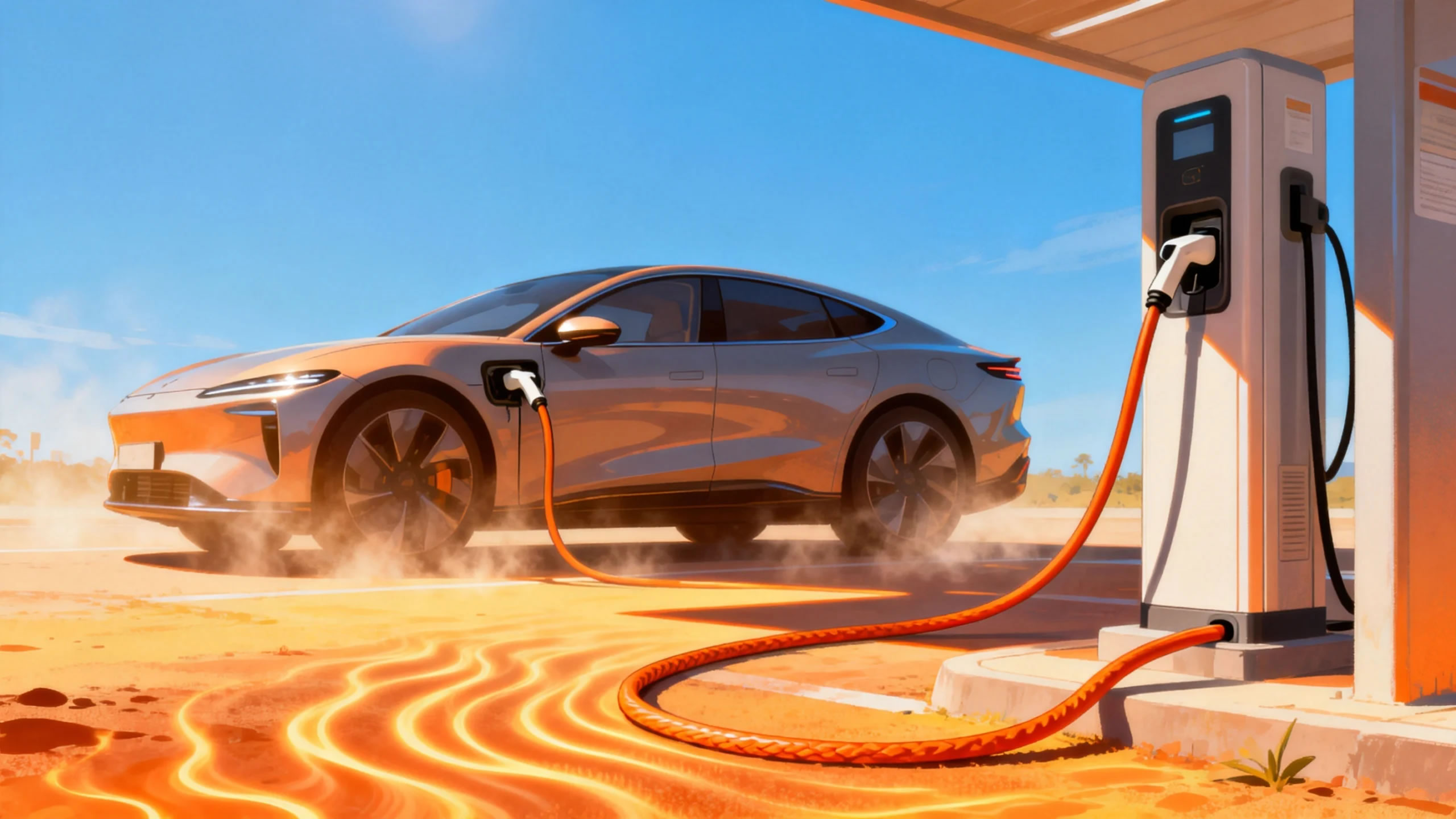
Hot weather can affect how an electric vehicle manages its battery, uses energy, and charges. During summer, high outdoor temperatures combined with direct sunlight, long drives, and frequent fast charging can increase the demands on a vehicle's thermal management system.
Most modern electric vehicles are designed to operate in a wide range of temperatures. However, understanding how heat affects charging can help drivers protect their vehicles, plan journeys, and charge more comfortably.
1. How Does Hot Weather Affect EV Charging?
EV batteries perform best within a temperature range specified by the manufacturer. When battery temperatures become too high, the vehicle's battery management system may adjust charging power or activate cooling systems.
In hot conditions, you may notice:
-
Reduced DC fast-charging power when the battery is too warm
-
Additional energy use for battery and cabin cooling
-
Changes in estimated driving range
-
Longer charging sessions if the vehicle limits power to control temperature
The effect depends on the vehicle, battery chemistry, ambient temperature, battery state of charge, and driving conditions. High outdoor temperatures do not automatically mean that charging will be slower; the battery's actual temperature and the vehicle's thermal management system are important factors.
2. Choose Your Charging Time Wisely
When practical, charge during cooler periods, such as early morning or later in the evening.
Cooler conditions may reduce the need for intensive cooling, particularly if the vehicle has been parked in the shade. However, charging time alone does not determine battery temperature, and a battery that has become hot after a long drive may still need cooling.
If your vehicle offers scheduled charging, you can use it to take advantage of convenient electricity rates or a preferred charging period.
Always ensure that your charging schedule leaves enough time and energy for your next journey.
3. Park in the Shade When Possible
Direct sunlight can heat the vehicle's exterior and cabin considerably. Parking in a shaded area or covered garage can help reduce exposure to solar heat.
Useful habits include:
-
Choosing shaded parking when available
-
Using a suitable sunshade to reduce cabin heat
-
Avoiding unnecessary long periods of parking in direct sunlight
-
Allowing the vehicle's cooling system to operate as designed
Parking in the shade does not eliminate battery heating, but it can make the cabin more comfortable and reduce the initial cooling demand.
Never cover or obstruct the vehicle's battery cooling inlets, ventilation openings, or other components identified in the owner's manual.
4. Understand DC Fast Charging in Hot Weather
DC fast charging can generate heat in the battery, especially when charging at high power. In hot weather, the vehicle may need to manage both the heat produced during charging and the surrounding temperature.
If the battery becomes too warm, the vehicle may reduce charging power to maintain safe operating conditions.
To make charging stops more predictable:
-
Check your vehicle's recommended charging procedure.
-
Allow the vehicle to manage battery cooling automatically.
-
Avoid assuming that a high-power charger will always deliver its maximum rated output.
-
Leave additional time for charging during extreme heat.
-
Follow any temperature warnings shown by the vehicle.
A slower-than-expected session does not necessarily indicate a fault with the charging station.
5. Does Air Conditioning Affect Charging?
Using air conditioning consumes electricity, but its effect depends on when and how the system is used.
When driving, cabin cooling draws energy from the vehicle and can reduce the distance available from a given battery charge. While charging, some vehicles can operate the air conditioning and battery cooling systems using power from the charging supply, although the exact behavior varies by model.
If your vehicle supports remote climate control, cooling the cabin while connected to a charger can make departure more comfortable and may reduce the initial cooling demand on the battery.
Check your vehicle's settings and instructions to understand how climate control operates during charging.
6. Is It Safe to Charge an EV in Extreme Heat?
EV charging equipment is designed for specified operating conditions. Nevertheless, extreme heat makes it important to use equipment correctly and pay attention to warning signs.
Follow these precautions:
-
Use chargers and cables that are in good condition.
-
Check the equipment's specified operating temperature range.
-
Keep connectors clean and use them according to the manufacturer's instructions.
-
Do not use damaged plugs, cables, or outlets.
-
Avoid extension cords unless the equipment manufacturer explicitly permits the intended setup.
-
Stop charging and seek assistance if you notice unusual smells, visible damage, repeated fault warnings, or abnormal overheating.
A connector or cable becoming slightly warm during operation can be normal. However, excessive heat, discoloration, melting, or burning smells should never be ignored.
Do not attempt to repair charging equipment yourself.
7. Does Hot Weather Damage the EV Battery?
High temperatures can accelerate battery aging over time, particularly when a battery remains hot for extended periods or is frequently kept at a high state of charge. The actual effect depends on battery design, chemistry, thermal management, and usage patterns.
To support long-term battery health:
-
Follow the manufacturer's recommended daily charging limits.
-
Avoid leaving the battery at a very high state of charge for extended periods in extreme heat unless needed or recommended.
-
Use the vehicle's scheduled charging and thermal management features where appropriate.
-
Follow manufacturer guidance for parking and long-term storage.
There is no single charging percentage that is ideal for every EV. Some vehicles use different recommendations for daily driving and long trips, so consult the owner's manual.
8. A Simple Hot-Weather Charging Checklist
Before charging during hot weather:
-
Check the vehicle's battery temperature warnings and charging status.
-
Park in the shade when practical.
-
Allow extra time for charging in extreme heat.
-
Keep charging cables and connectors in good condition.
-
Do not obstruct battery cooling or ventilation openings.
-
Follow the manufacturer's charging limits and battery-care guidance.
-
Stop using equipment that shows signs of damage or abnormal overheating.
Hot weather does not prevent safe and convenient EV charging, but high temperatures can increase the demands on battery cooling and affect charging performance.
The most useful habits are to park in the shade when possible, allow the vehicle to manage battery temperature, follow the manufacturer's charging recommendations, and pay attention to equipment condition.
With a little preparation, EV drivers can manage summer charging more confidently while supporting battery performance and long-term reliability.
 October 22, 2026