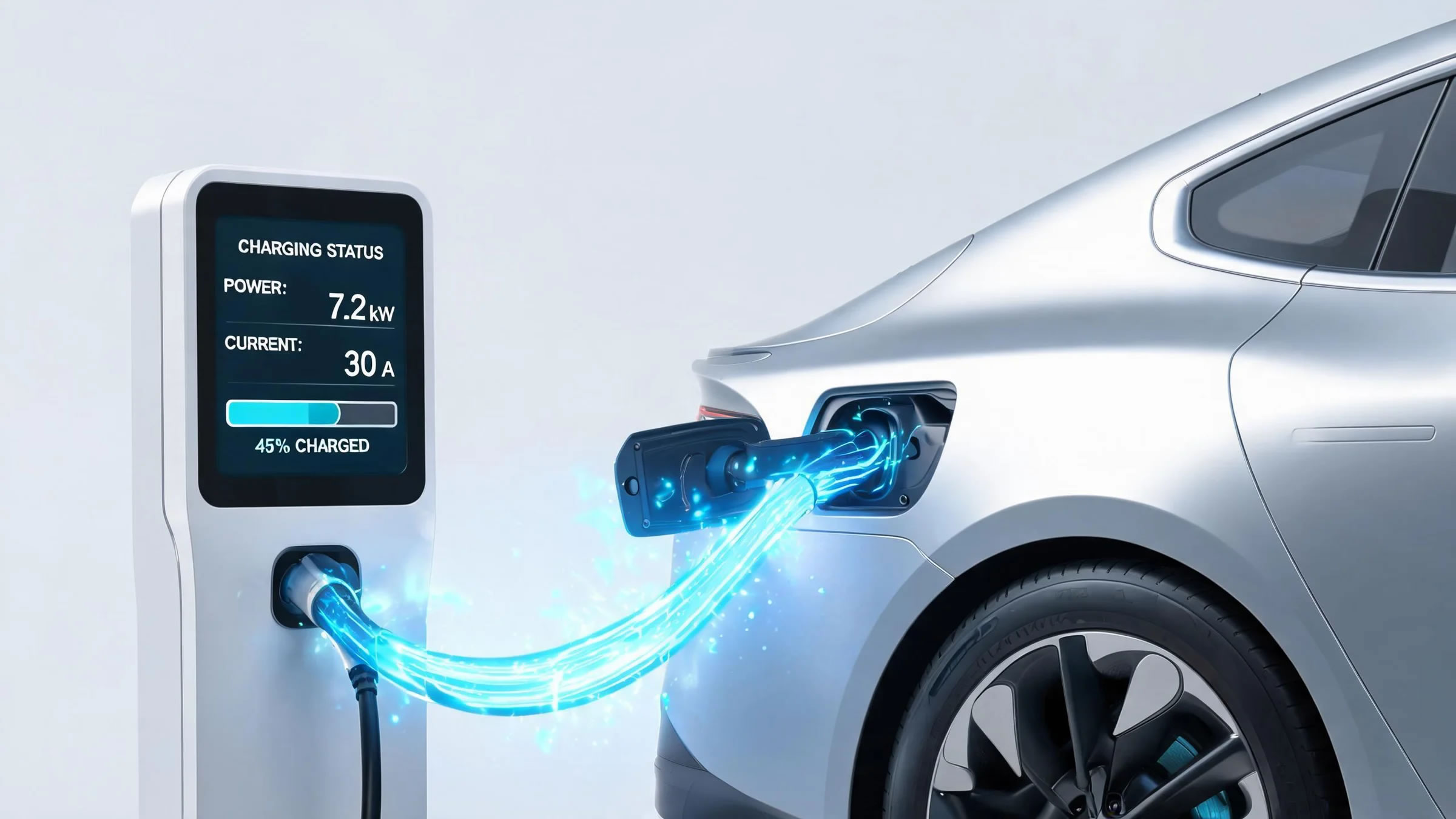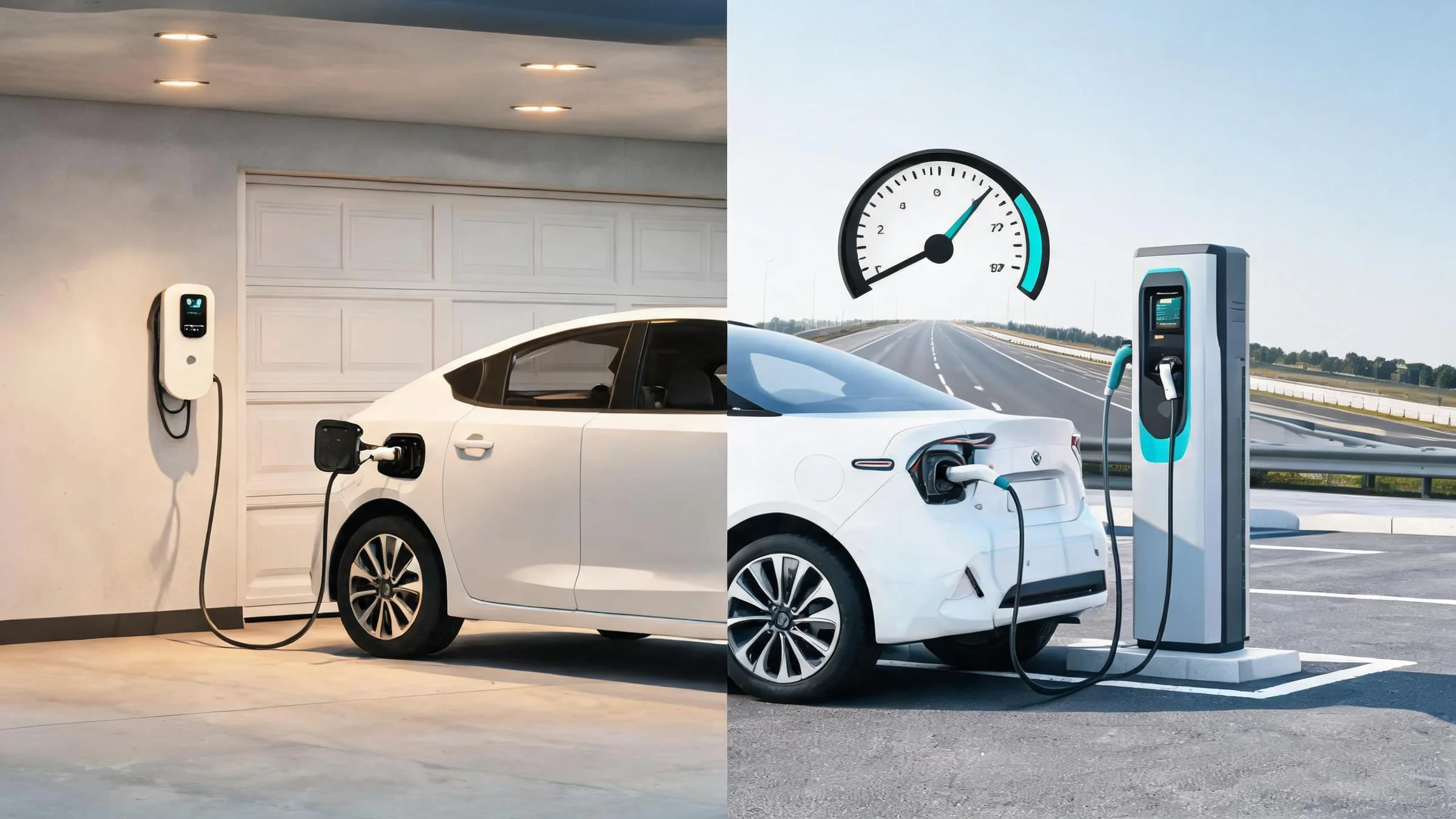
As electric vehicles (EVs) become more common, understanding the difference between AC and DC charging is essential for both users and businesses. While both methods deliver energy to an EV, they differ significantly in speed, technology, cost, and application scenarios. Choosing the right type of charger can directly impact user experience, operational efficiency, and return on investment.
This guide explains how AC and DC charging work, compares their advantages, and helps you select the best solution.
1. What Is AC Charging?
AC (Alternating Current) charging is the most common type of EV charging, especially in residential and workplace environments.
How It Works
Electricity from the grid is delivered as AC power. The vehicle’s onboard charger converts this AC into DC to charge the battery.
Typical Power Range
- 3.7 kW – 22 kW
Key Advantages
- Lower equipment and installation cost
- Ideal for long parking durations
- Widely available and easy to deploy
Limitations
- Slower charging speed
- Depends on the vehicle’s onboard charger capacity
2. What Is DC Fast Charging?
DC (Direct Current) charging is designed for high-speed charging, mainly used in public and commercial environments.
How It Works
The charger converts AC power into DC internally and delivers it directly to the battery, bypassing the vehicle’s onboard charger.
Typical Power Range
- 30 kW – 350 kW+
Key Advantages
- Much faster charging (up to 80% in 20–30 minutes)
- Suitable for high-traffic locations
- Supports long-distance travel
Limitations
- Higher cost of equipment and installation
- Requires more advanced infrastructure
3. AC vs DC Charging: Key Differences
| Feature | AC Charging | DC Charging |
|---|---|---|
| Speed | Slow to moderate | Fast to ultra-fast |
| Power Range | 3.7–22 kW | 30–350+ kW |
| Cost | Lower | Higher |
| Installation | Simple | Complex |
| Use Case | Home, office | Highway, commercial |
| Conversion | In vehicle | In charger |
4. Which One Should You Choose?
Choosing between AC and DC charging depends on your specific needs:
For Homeowners
AC charging is the best choice due to affordability and overnight charging convenience.
For Businesses
A mix of AC and DC chargers provides flexibility:
- AC for long-stay users
- DC for quick turnover and premium services
For Commercial Operators
DC fast charging is ideal for:
- Highway stations
- Fleet operations
- Public charging hubs
5. Hybrid Deployment Strategy (Recommended)
The most effective solution today is a hybrid charging model, combining both AC and DC chargers.
Benefits include:
- Maximizing station utilization
- Serving different customer needs
- Improving overall revenue potential
This approach is widely adopted in mature EV markets.
AC and DC charging each play a critical role in the EV ecosystem. While AC charging offers cost-effective and convenient solutions for daily use, DC fast charging enables rapid energy delivery for commercial and long-distance scenarios.
Understanding their differences allows individuals and businesses to make smarter decisions. As EV adoption continues to grow, deploying the right mix of charging technologies will be key to building efficient, scalable, and future-ready charging infrastructure.
 August 5, 2026