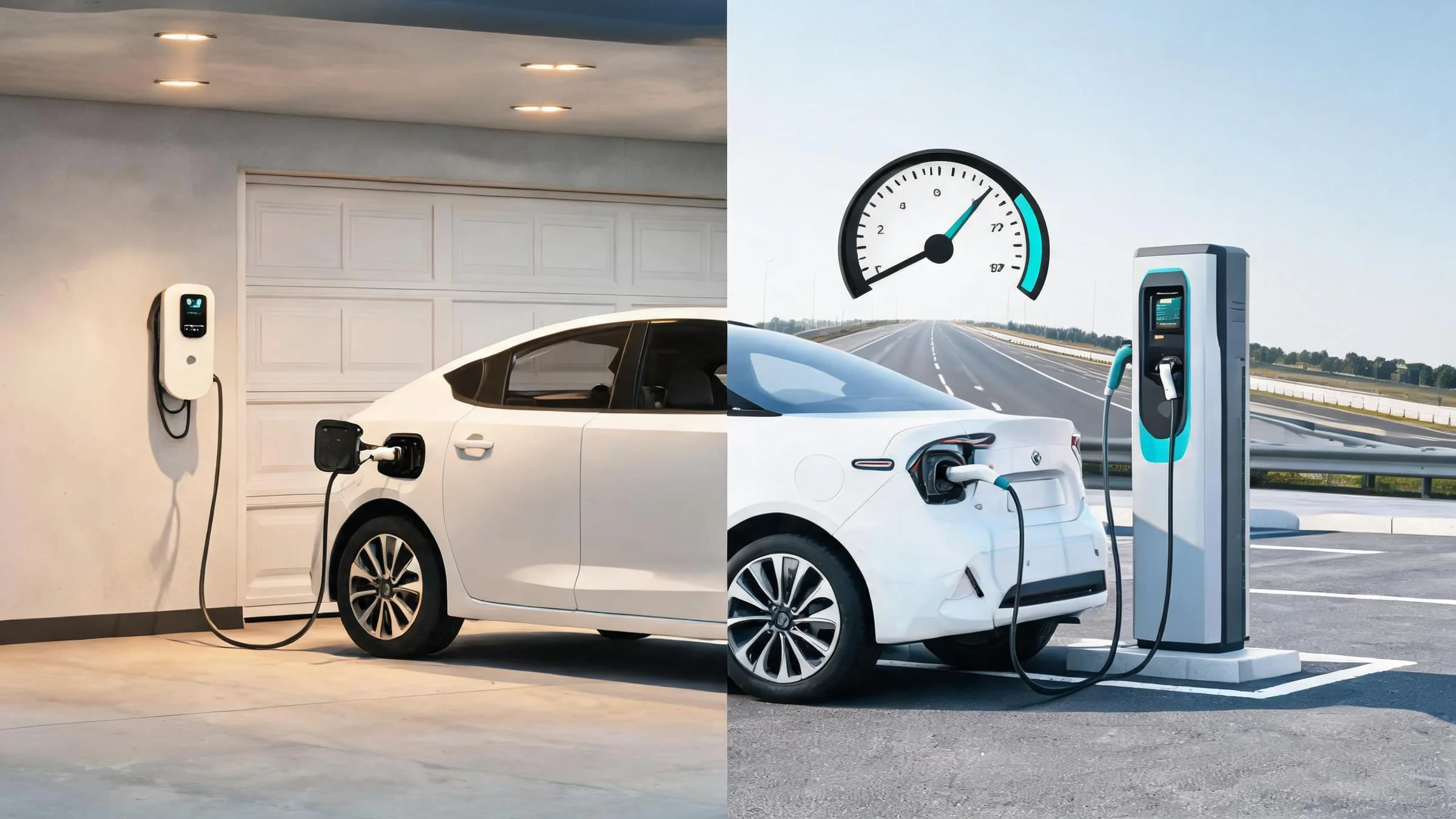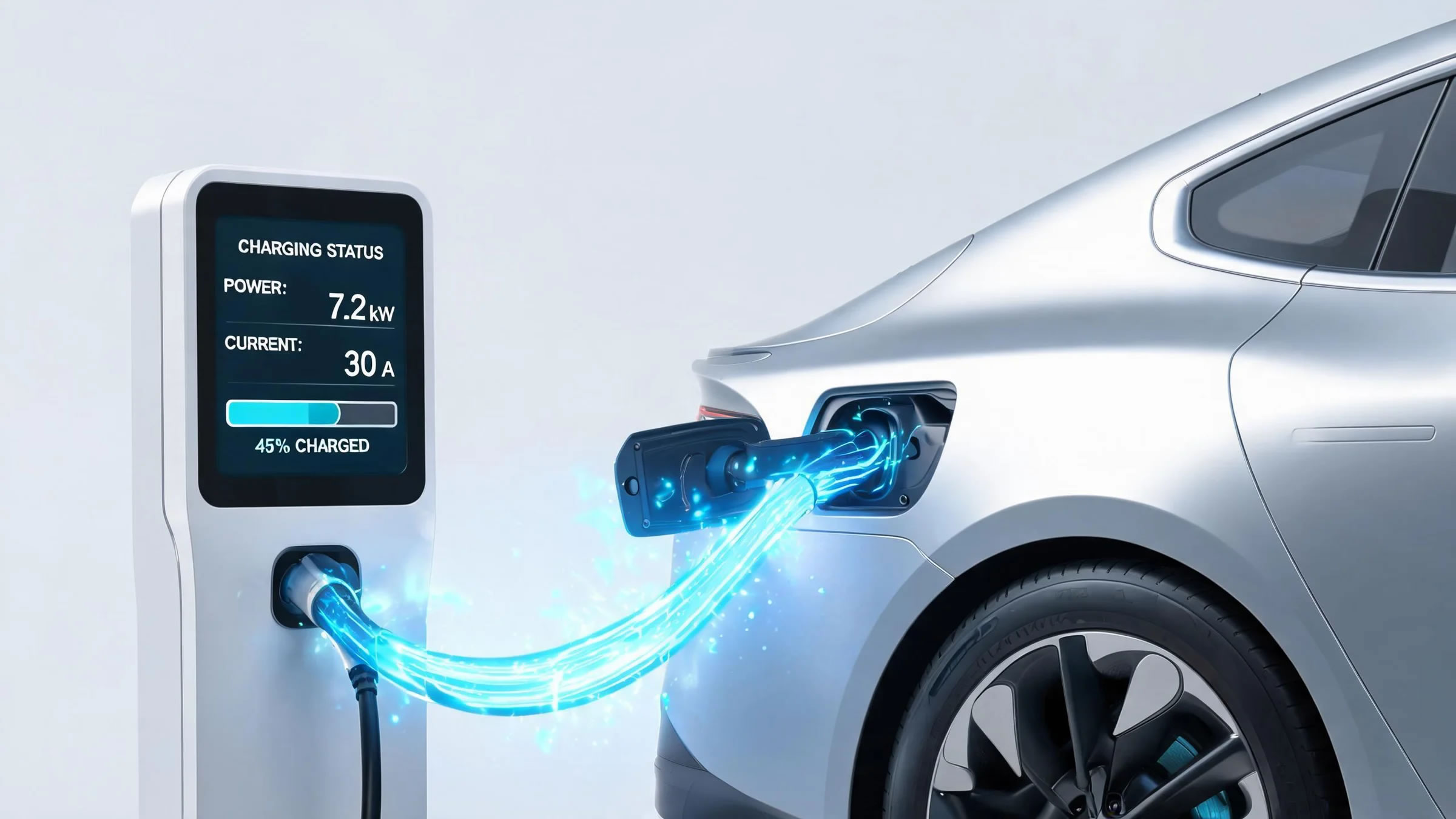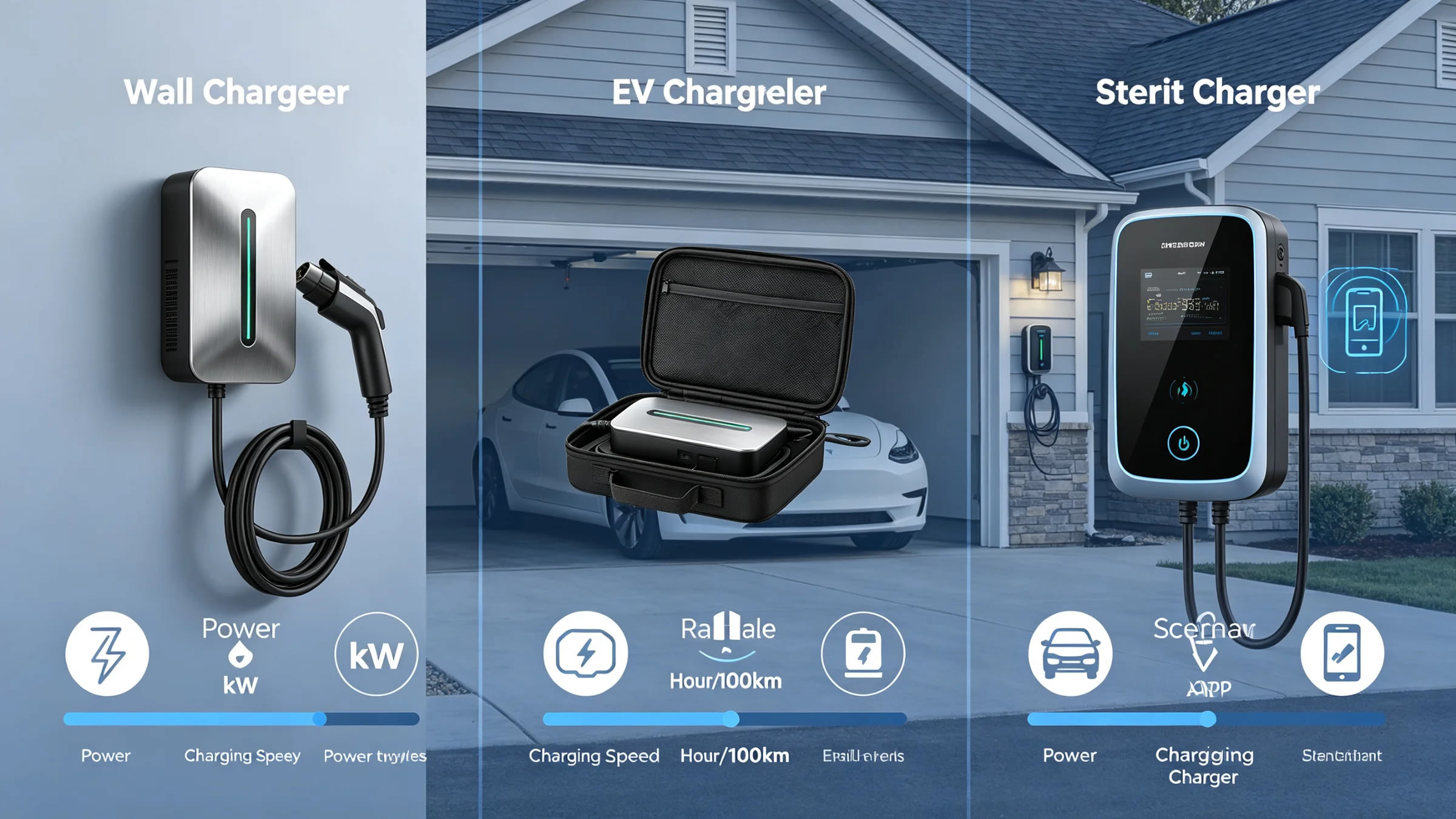
As electric vehicles become increasingly popular, more and more owners are choosing to install home EV chargers for a more convenient charging experience. However, with different power levels, charging standards, installation requirements, and smart features available, selecting the right charger can be confusing.
The best EV charger is not always the most powerful one. The right choice depends on your vehicle, daily driving habits, home electrical conditions, and future needs.
This guide explains the key factors every EV owner should consider before purchasing a home charging solution.
1. Check Your Vehicle Compatibility First
The first step when choosing an EV charger is understanding your vehicle’s charging requirements.
Different electric vehicles may have different:
- Charging connectors
- Maximum charging power
- AC charging capacity
- Battery capacity
For example:
A vehicle that supports only 7kW AC charging cannot charge faster even when connected to a 22kW charger.
Therefore, always check:
- Vehicle charging port standard
- Maximum AC charging power
- Recommended charging voltage and current
Choosing a compatible charger ensures better efficiency and avoids unnecessary costs.
2. Understand EV Charger Power Levels
Charging power is one of the most important factors when selecting a charger.
3.5kW Charger
Suitable for:
- Plug-in hybrid vehicles
- Low daily mileage users
Charging speed:
Approximately 15–30 km range per hour.
Advantages:
- Low installation requirements
- Lower cost
7kW Charger
The most common home charging solution.
Suitable for:
- Most private EV owners
- Daily commuting vehicles
Charging speed:
Approximately 30–50 km range per hour.
Advantages:
- Good balance between speed and cost
- Works well for overnight charging
11kW Charger
Suitable for:
- Users with higher daily mileage
- Homes with three-phase electricity
Advantages:
- Faster charging
- Better future compatibility
22kW Charger
Suitable for:
- Large battery EVs
- Commercial users
- Properties with sufficient electrical capacity
Advantages:
- Maximum AC charging speed
Important:
Not every vehicle supports 22kW AC charging.
3. Consider Your Daily Driving Habits
The ideal charger depends on how much you drive every day.
Short Daily Distance
If you drive:
- 20–50 km per day
A 7kW home charger is usually enough.
You can fully recharge overnight.
Long Daily Distance
If you drive:
- More than 100 km per day
A higher-power charger may provide more convenience.
Multiple EVs at Home
If your family owns multiple electric vehicles:
Consider:
- Higher charging power
- Load balancing technology
- Smart charging management
4. Check Your Home Electrical Conditions
Before installation, you should evaluate:
Electrical Capacity
Your home needs enough available power capacity.
Factors include:
- Voltage
- Maximum current
- Circuit capacity
Installation Location
Consider:
- Distance from parking space
- Cable length
- Indoor or outdoor environment
For outdoor installation, choose chargers with:
- Weather protection
- Dust resistance
- Safety certification
5. Safety Features Are Essential
A reliable EV charger should include multiple protection systems.
Important safety features:
Overcurrent Protection
Prevents excessive current damage.
Overvoltage Protection
Protects vehicles and electrical systems.
Leakage Protection
Reduces electrical safety risks.
Temperature Monitoring
Automatically adjusts charging when overheating is detected.
IP Protection Rating
For outdoor chargers:
IP55 or higher provides better protection against dust and water.
6. Smart Features Improve User Experience
Modern EV chargers are becoming smarter.
Useful smart functions include:
Mobile App Control
Users can:
- Start or stop charging remotely
- Check charging status
- View charging history
Scheduled Charging
Charge during lower electricity price periods.
Energy Monitoring
Track:
- Electricity usage
- Charging cost
- Charging frequency
Remote Maintenance
Smart chargers allow service providers to monitor equipment status remotely.
7. Should You Buy the Most Powerful Charger?
Many users believe:
"More power means better."
But this is not always true.
A higher-power charger may require:
- Higher installation cost
- Electrical upgrades
- Additional equipment
The best charger is the one that matches:
✓ Your vehicle
✓ Your home electricity system
✓ Your driving habits
✓ Your future plans
8. Recommended Home EV Charger Selection Guide
| User Type | Recommended Charger |
|---|---|
| Plug-in hybrid owner | 3.5kW |
| Normal EV commuter | 7kW |
| High mileage driver | 11kW |
| Large battery EV owner | 11kW–22kW |
| Multiple EV household | Smart charger system |
Choosing an EV charger is an important decision that affects daily convenience, charging efficiency, and long-term user experience.
Instead of simply choosing the highest power option, EV owners should consider vehicle compatibility, home electrical conditions, charging habits, safety features, and smart functions.
With the right charging solution, electric vehicle ownership becomes easier, more convenient, and more sustainable.
As EV adoption continues worldwide, home charging will become an essential part of the future electric mobility ecosystem.
 August 7, 2026