An EV charger is designed for regular use, but like other electrical equipment, it still needs basic care and inspection. Proper maintenance can help identify potential problems early, keep charging reliable, and extend the service life of the equipment.
The good news is that most everyday EV charger maintenance is simple. EV owners do not need to perform complicated electrical work. Instead, regular visual checks, proper cleaning, and attention to unusual signs can make a meaningful difference.
1. Check the Charger and Cable Regularly
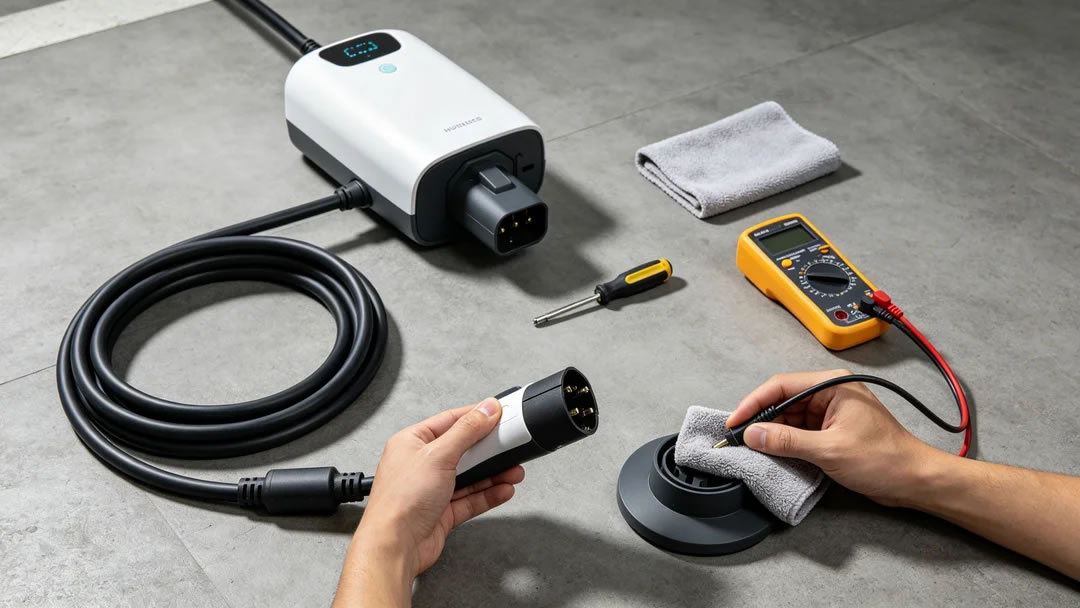
The charging cable and connector are among the most frequently handled parts of an EV charging system.
Before charging, check for:
- Cuts or cracks on the cable
- Exposed wires
- Damaged connector housing
- Bent or damaged pins
- Signs of overheating or discoloration
- Loose connections
If you notice visible damage, stop using the charger and have it inspected by a qualified professional.
Do not continue using damaged electrical equipment simply because it still appears to work.
2. Keep the Connector Clean and Dry
Dust, dirt, moisture, and other contaminants can accumulate around the charging connector over time.
When the connector is not being used, keep it properly stored and protected according to the manufacturer's instructions.
For routine cleaning, use a clean, dry or appropriately damp soft cloth. Avoid using aggressive chemicals or spraying liquid directly into the connector.
The connector should be dry and free from visible contamination before it is connected to the vehicle.
3. Protect the Charger From Unnecessary Physical Damage
The installation environment can have a major effect on equipment condition.
Try to prevent:
- Vehicles from running over the cable
- Sharp bends or excessive twisting
- Heavy objects pressing on the cable
- Repeated pulling from the connector
- Unnecessary impact to the charger
A cable should normally hang or rest naturally rather than remain under constant tension.
Good cable management is a simple way to reduce long-term wear.
4. Pay Attention to Heat
EV charging involves electrical power, so some warmth during operation can be normal.
However, unusual heat should not be ignored.
Pay attention if you notice:
- The charger becoming unusually hot
- A connector that feels excessively hot
- Burn marks or discoloration
- A burning smell
- Repeated charging interruptions
These may indicate a connection, electrical, or equipment problem.
If unusual heating occurs, stop charging and arrange a professional inspection.
5. Keep Ventilation Areas Clear
Some EV charging equipment uses ventilation or heat-dissipation structures to manage operating temperature.
Make sure the charger's ventilation areas are not blocked by:
- Boxes
- Clothing
- Tools
- Dust buildup
- Other objects
If the manufacturer specifies minimum clearance around the equipment, follow those requirements during installation and everyday use.
6. Check the Charging Environment
Outdoor chargers are exposed to changing environmental conditions such as rain, sunlight, dust, and temperature changes.
Even when a charger has an appropriate IP rating, environmental protection has limits.
Regularly inspect the installation area for:
- Water accumulation
- Physical impact
- Corrosion
- Loose mounting
- Damaged protective covers
- Unusual dirt or debris
The charger should be installed and operated according to its rated environment and the manufacturer's instructions.
7. Keep Firmware and Software Updated
For smart EV chargers, maintenance is not only physical.
Some connected chargers may receive firmware or software updates that improve:
- System stability
- Communication
- Charging control
- App functionality
- Security
- Compatibility
If your charger supports software updates, check the manufacturer's recommended update process periodically.
Avoid interrupting an update unless the manufacturer specifically instructs you to do so.
8. Monitor Charging Performance
You do not need to measure every charging session manually.
Instead, pay attention to changes in normal behavior.
For example, if your vehicle usually charges normally but suddenly begins experiencing:
- Frequent charging interruptions
- Repeated error messages
- Unstable connection
- Unexpectedly low charging power
- Connector temperature warnings
the charger, vehicle, electrical installation, or communication system may require inspection.
A sudden change from normal operation is often more useful to notice than a single unusual charging session.
9. When Should a Professional Check the Charger?
Some maintenance tasks should not be performed by the EV owner.
Contact a qualified electrician or authorized service provider if you need to inspect or modify:
- Fixed electrical wiring
- Circuit breakers
- Grounding
- Protective devices
- Internal charger components
- Damaged terminals
- Installation capacity
Never open the charger housing or modify internal electrical components unless you are properly qualified and the manufacturer permits it.
10. A Simple Maintenance Routine
For most home EV owners, a simple routine is enough.
Before charging:
Check the cable and connector for obvious damage.
During charging:
Pay attention to unusual heat, smells, sounds, or repeated interruptions.
After charging:
Store the cable and connector properly and avoid unnecessary bending or pulling.
Periodically:
Inspect the charger, mounting position, cable, connector, and surrounding environment.
When something changes:
If charging behavior suddenly becomes abnormal, investigate the cause rather than repeatedly restarting the charger.
Quick Maintenance Checklist
| Item | What to Check |
|---|---|
| Charging cable | Cuts, cracks, deformation |
| Connector | Damage, dirt, moisture, overheating |
| Charger body | Cracks, impact, discoloration |
| Installation | Stability and surrounding environment |
| Ventilation | Dust or blocked areas |
| Charging behavior | Errors or repeated interruptions |
| Smart functions | App and firmware status |
| Electrical system | Professional inspection when required |
EV charger maintenance does not have to be complicated.
Regular visual inspections, proper cable storage, a clean connector, a suitable installation environment, and attention to unusual charging behavior can help keep your charging system reliable.
Most importantly, EV owners should know the difference between basic user maintenance and electrical work that requires a qualified professional.
Taking a few minutes to check your charger regularly is a simple habit that can help support safer and more dependable EV charging over the long term.
 September 11, 2026