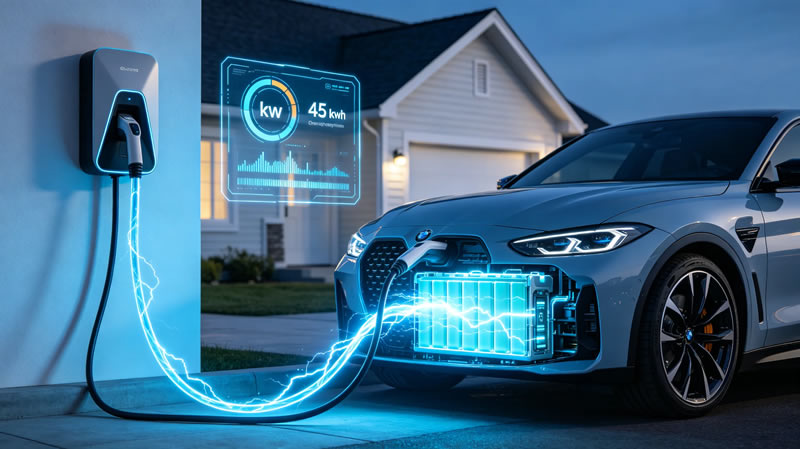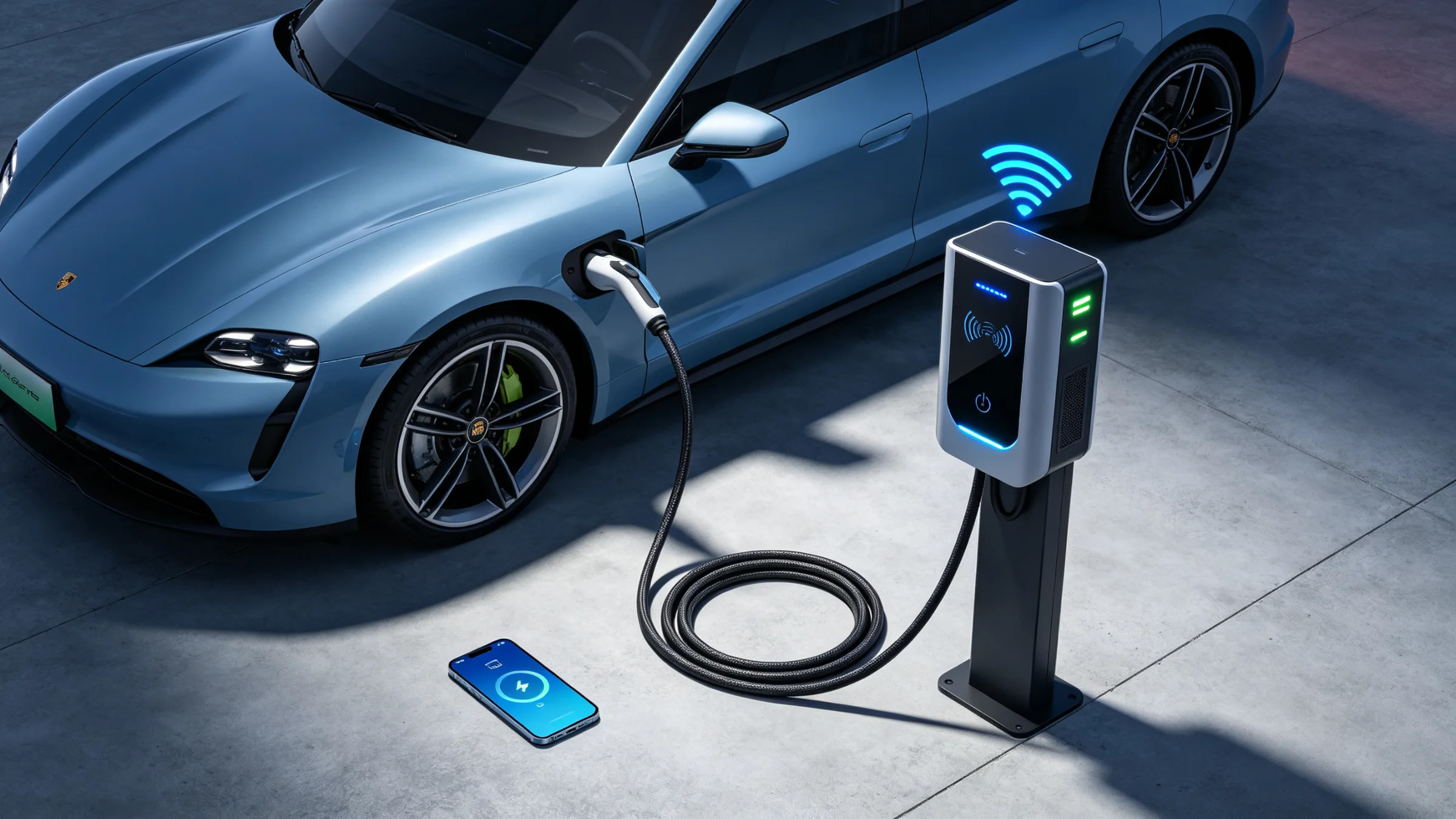
EV charging is becoming more intelligent as charging equipment connects with vehicles, mobile applications, and energy management systems. Instead of simply delivering electricity, smart EV chargers can monitor charging conditions, manage power, and provide users with greater control over when and how their vehicles charge.
But what exactly makes an EV charger “smart”? This guide explains the basic functions of smart charging technology and how it can improve everyday EV charging.
1. What Is Smart EV Charging?
Smart EV charging uses digital communication and software to manage the charging process.
A conventional charger mainly provides electricity to the vehicle.
A smart charger can additionally:
- Monitor charging status
- Schedule charging
- Adjust charging power
- Record energy consumption
- Connect to mobile applications
- Communicate with energy management platforms
The exact functions vary between different chargers and systems.
2. Scheduled Charging
One of the most useful smart charging features is scheduled charging.
Users can set a specific period for charging instead of starting immediately after plugging in.
For example:
Plug in → Set charging schedule → Vehicle remains connected → Charging starts automatically
This can be useful for people who want their vehicle ready at a particular time or who have electricity tariffs that vary by time of day.
3. Remote Charging Control
Some smart chargers can connect to a mobile application.
Depending on the system, users may be able to:
- Start or stop charging
- Check charging status
- View charging history
- Monitor energy consumption
- Receive charging notifications
Remote access can make it easier to manage charging without repeatedly checking the vehicle.
4. Energy Monitoring
Smart charging systems can provide information about electricity consumption.
Users may be able to view:
- Energy used during a charging session
- Charging duration
- Historical consumption
- Estimated charging costs
This information can help EV owners better understand their charging habits and overall energy usage.
5. Dynamic Load Management
When several high-power electrical devices operate at the same time, the available electrical capacity of a property may become limited.
Smart charging systems can use load management to adjust charging power according to available capacity.
For example:
Household electricity demand increases → EV charging power is reduced
When other electrical loads decrease:
Available capacity increases → EV charging power can increase
This can help avoid unnecessary overload and make better use of the available electrical capacity.
6. Smart Charging and Renewable Energy
Smart charging can also work together with renewable energy systems.
For homes equipped with solar panels, charging can potentially be scheduled or adjusted according to available solar generation.
A simplified system may look like:
Solar Generation → Home Energy → EV Charging
When sufficient solar energy is available, the charging system may use more of that energy, depending on the system configuration.
This creates a closer connection between EV charging and household energy management.
7. Smart Charging Does Not Always Mean Faster Charging
An important point is that smart charging is not necessarily about increasing charging speed.
Instead, it focuses on using energy more intelligently.
For example, a smart charger may temporarily reduce charging power when household electricity demand is high.
The vehicle may take longer to charge, but the system can make better use of the available electrical capacity.
Therefore:
Fast Charging = More Power in Less Time
Smart Charging = Better Control of When and How Power Is Used
These are different concepts, although modern charging systems can offer both.
8. Is a Smart Charger Worth It?
Whether smart charging is useful depends on the user's needs.
Smart features may be particularly helpful for:
- EV owners who charge frequently
- Homes with time-of-use electricity tariffs
- Households with multiple high-power appliances
- Homes with solar energy systems
- Users who want detailed energy information
- Users who want remote charging control
For someone who only needs simple overnight charging, advanced smart features may be less important.
9. What Should You Look for in a Smart EV Charger?
When comparing smart charging equipment, consider:
Connectivity
Does the charger support Wi-Fi, Bluetooth, cellular connectivity, or another communication method?
App Functions
Can users monitor and control charging remotely?
Energy Monitoring
Does the system provide useful charging and energy data?
Load Management
Can charging power respond to household or site electricity demand?
Scheduling
Can users set charging times?
Compatibility
Can the charger work with the vehicle and electrical system?
The most useful features are those that match the user's actual needs.
Quick Summary
| Smart Feature | Main Benefit |
|---|---|
| Scheduled Charging | Controls when charging starts |
| Remote Control | Manage charging from a mobile device |
| Energy Monitoring | Understand electricity consumption |
| Load Management | Adjust power according to available capacity |
| Solar Integration | Coordinate charging with renewable energy |
| Charging History | Track previous charging sessions |
Smart EV charging represents the evolution of charging from simple electricity delivery to intelligent energy management.
Features such as scheduled charging, remote control, energy monitoring, and dynamic load management can give EV owners greater control over their charging habits and electricity use.
However, not every driver needs every smart feature. The best solution depends on the vehicle, home electrical system, charging habits, electricity pricing, and future energy needs.
As EV adoption grows, smart charging will increasingly connect vehicles with homes, renewable energy systems, and broader energy networks—making charging not only a transportation function, but also an important part of the modern energy ecosystem.
 August 31, 2026