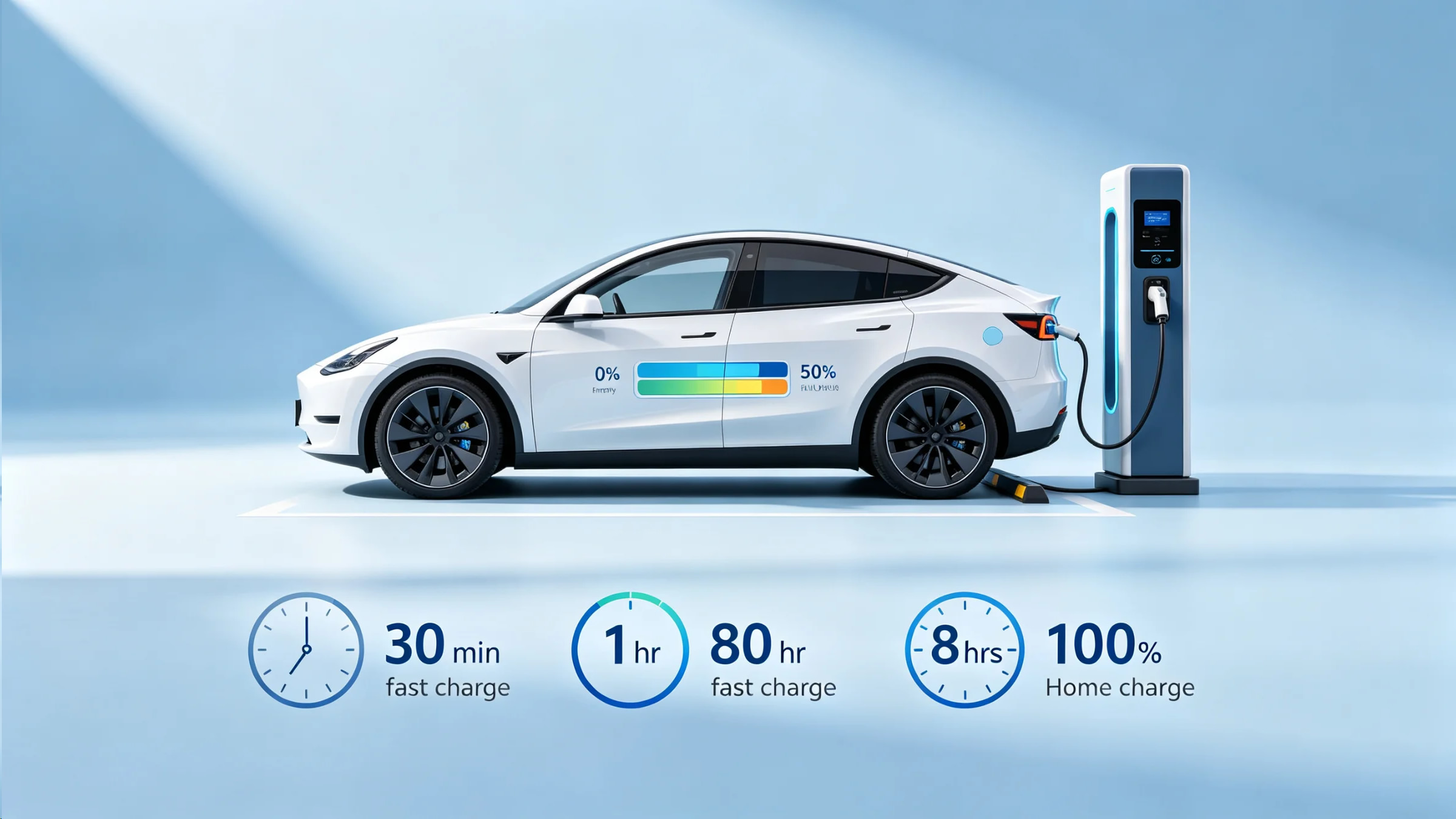
How long does it take to charge an electric vehicle? There is no single answer. Charging time depends on several factors, including the charger's power, the vehicle's battery capacity, the vehicle's maximum charging capability, the current battery level, and charging conditions.
A higher-power charger can generally deliver energy faster, but the vehicle must also be able to accept that power. Understanding these factors can help EV owners estimate charging time more realistically and choose a charging solution that fits their daily needs.
1. What Determines EV Charging Time?
Several factors influence how quickly an EV can charge.
Charger Power
Charging power is measured in kilowatts (kW). A higher power rating generally allows more energy to be delivered in less time.
Common AC charging levels include:
- 3.5kW
- 7kW
- 11kW
- 22kW
DC fast chargers can provide significantly higher power.
Battery Capacity
A larger battery generally requires more energy to charge from empty to full.
For example, a 60kWh battery requires more energy than a 40kWh battery under similar conditions.
Vehicle Charging Limit
The vehicle itself has a maximum charging capability.
If a vehicle can accept a maximum of 11kW AC power, connecting it to a 22kW AC charger does not automatically double the charging speed.
2. A Simple Charging Time Calculation
A basic estimate can be calculated using:
Charging Time ≈ Energy Required ÷ Charging Power
For example, if a vehicle needs approximately 35kWh and charges at 7kW:
35 ÷ 7 ≈ 5 hours
This is only a theoretical estimate.
Actual charging time can be longer because charging efficiency is not 100%, and charging power may change during the charging process.
3. How Long Does a 7kW Charger Take?
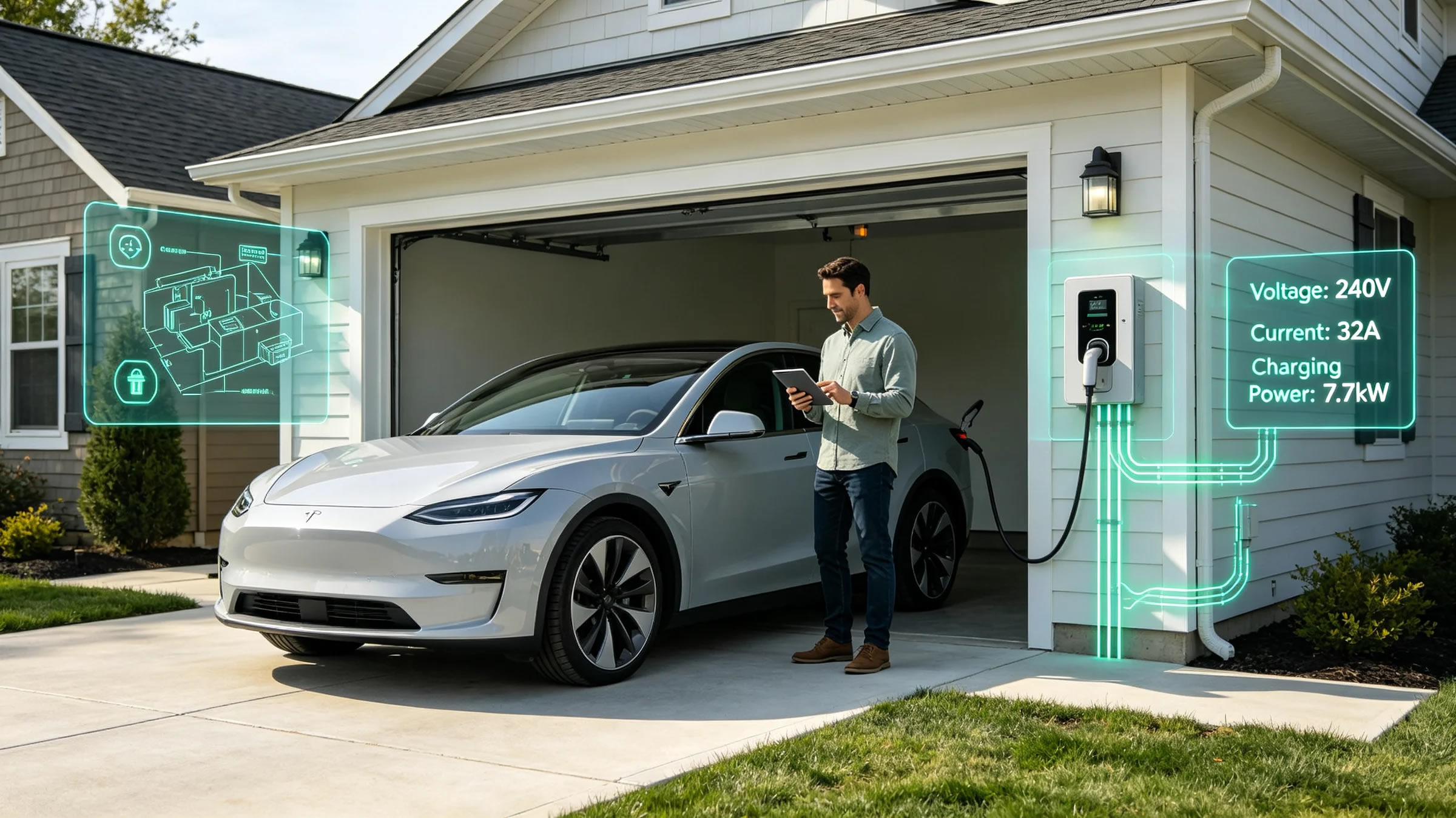
A 7kW charger is commonly used for home charging.
For example, adding approximately 35kWh of energy would theoretically take:
35 ÷ 7 ≈ 5 hours
A larger battery would require more time, while a smaller amount of energy would take less time.
For many daily drivers, overnight charging can provide sufficient time to replenish the energy used during the day.
4. How Long Does an 11kW Charger Take?
An 11kW charger can deliver energy faster than a 7kW charger when the vehicle and electrical system support it.
Using the same 35kWh example:
35 ÷ 11 ≈ 3.2 hours
However, actual charging time will vary depending on the vehicle's charging system and other conditions.
5. How Long Does a 22kW Charger Take?
A 22kW AC charger can theoretically deliver energy much faster than a 7kW charger.
For 35kWh:
35 ÷ 22 ≈ 1.6 hours
But there is an important limitation:
The vehicle must support 22kW AC charging.
If the vehicle's onboard charger is limited to 11kW, a 22kW charger will not make it charge at 22kW.
6. What About DC Fast Charging?
DC fast charging works differently from conventional AC charging.
With AC charging, the vehicle's onboard charger normally converts AC electricity into DC electricity for the battery.
With DC charging, the conversion equipment is located in the charging station, allowing DC electricity to be supplied directly to the vehicle's battery system.
This allows much higher charging power.
Depending on the vehicle and charger, a DC fast-charging session can add a significant amount of range in a relatively short period.
However, maximum charging power is not maintained throughout the entire session.
7. Why Does Charging Slow Down Near Full?
EV batteries generally do not charge at the same power level from beginning to end.
When the battery has a lower state of charge, charging power can be relatively high.
As the battery approaches a high state of charge, the vehicle may gradually reduce charging power.
This helps manage:
- Battery temperature
- Cell voltage
- Battery longevity
- Charging safety
As a result, charging from a low battery level to around 80% can be considerably faster than charging from 80% to 100%.
8. Does Temperature Affect Charging Time?
Yes.
Very low or very high temperatures can affect charging performance.
The vehicle's battery management system may adjust charging power to keep the battery within an appropriate operating range.
Some EVs use battery preconditioning before fast charging to help achieve better charging performance.
Therefore, charging time can vary between different seasons and driving conditions.
9. Does Battery Level Affect Charging Speed?
Yes.
The amount of energy required depends on the starting battery level.
For example, charging a battery from:
20% → 80%
requires less energy than:
0% → 100%
At the same time, the charging power may also change as the battery level increases.
For everyday use, drivers may therefore focus more on adding the energy needed for their next journey rather than always charging from empty to full.
10. Quick Comparison
| Charging Power | Typical Use | Relative Charging Speed |
|---|---|---|
| 3.5kW | PHEV / low usage | Slow |
| 7kW | Home charging | Moderate |
| 11kW | Faster home charging | Fast |
| 22kW | High-power AC charging | Faster |
| DC Fast Charging | Public / highway | Very fast |
Actual charging time depends on the vehicle, battery, charger, temperature, and other conditions.
11. How Can You Estimate Your Charging Time?
Before calculating, find three pieces of information:
1. Energy Required
How many kWh does the vehicle need?
2. Charging Power
How many kW can the vehicle actually accept?
3. Charging Conditions
Are temperature, battery level, or charging limits affecting the session?
Then use:
Estimated Time = Energy Required ÷ Effective Charging Power
Remember that this provides an estimate rather than an exact charging time.
EV charging time depends on much more than the charger's power rating. Battery capacity, vehicle charging limits, starting battery level, temperature, charging efficiency, and the charging curve can all affect the actual result.
A higher-power charger can reduce charging time when the vehicle and electrical system support it, but the most suitable solution depends on how the vehicle is used.
For everyday home charging, understanding your typical driving distance and charging needs is often more useful than simply choosing the highest available power.
The key is not just how powerful the charger is, but how well the charger, vehicle, battery, and charging environment work together.
 August 27, 2026