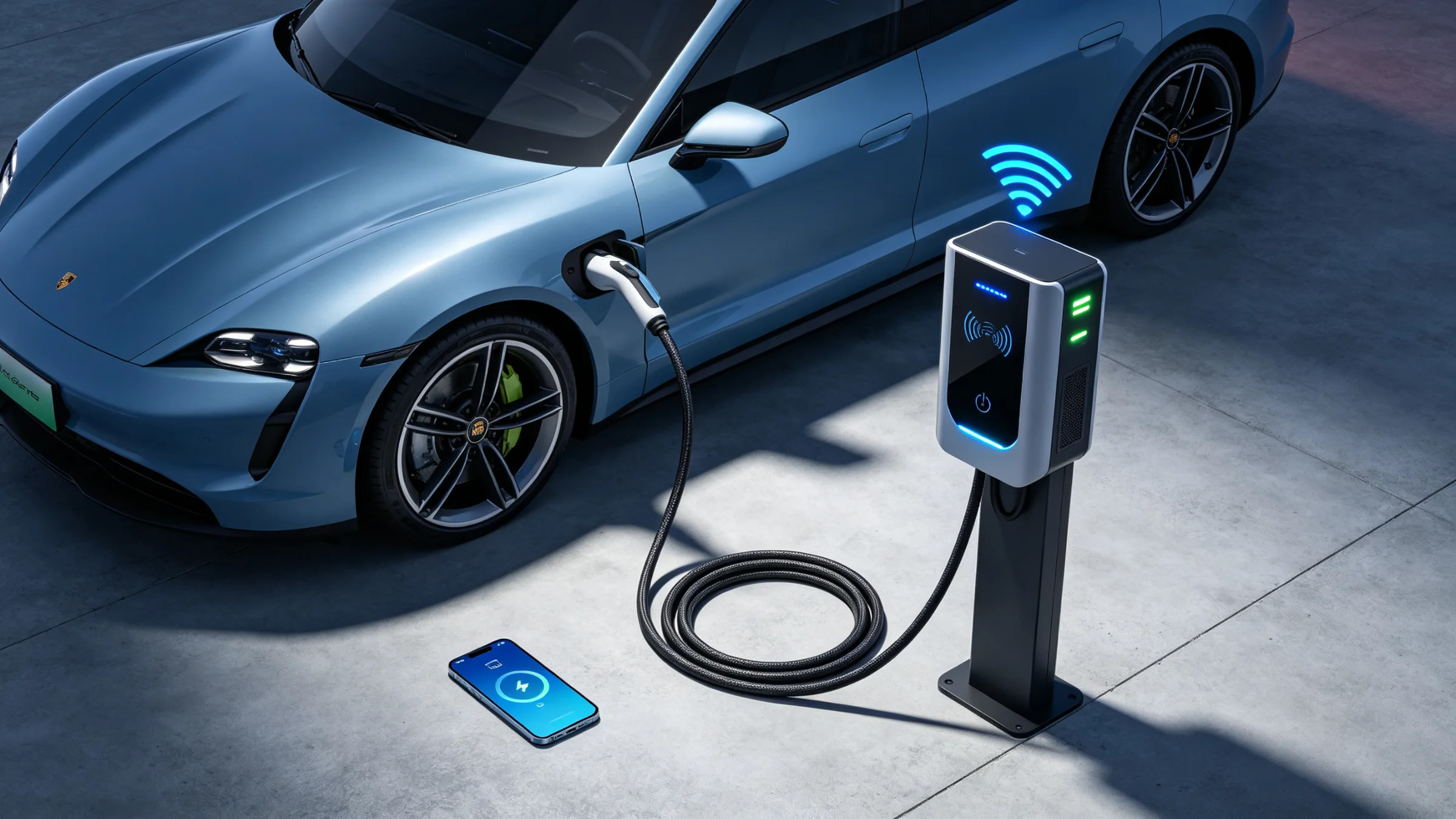
When people talk about EV charging, they often focus on charging power, connectors, or charging speed. But there is another important concept behind EV charging technology: charging modes.
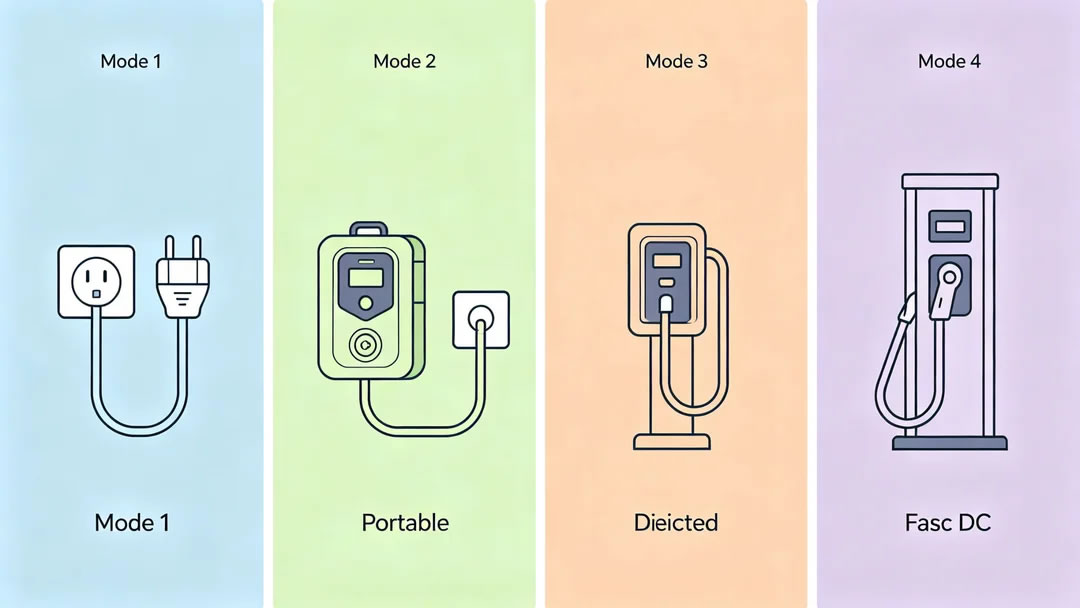
Mode 1, Mode 2, Mode 3, and Mode 4 describe different ways an electric vehicle connects to and communicates with the power supply. Understanding these modes can help EV owners better understand the difference between basic charging, home charging equipment, and DC fast charging.
1. What Are EV Charging Modes?
Charging modes describe the electrical connection and control system used between the vehicle and the power source.
They are different from connector types.
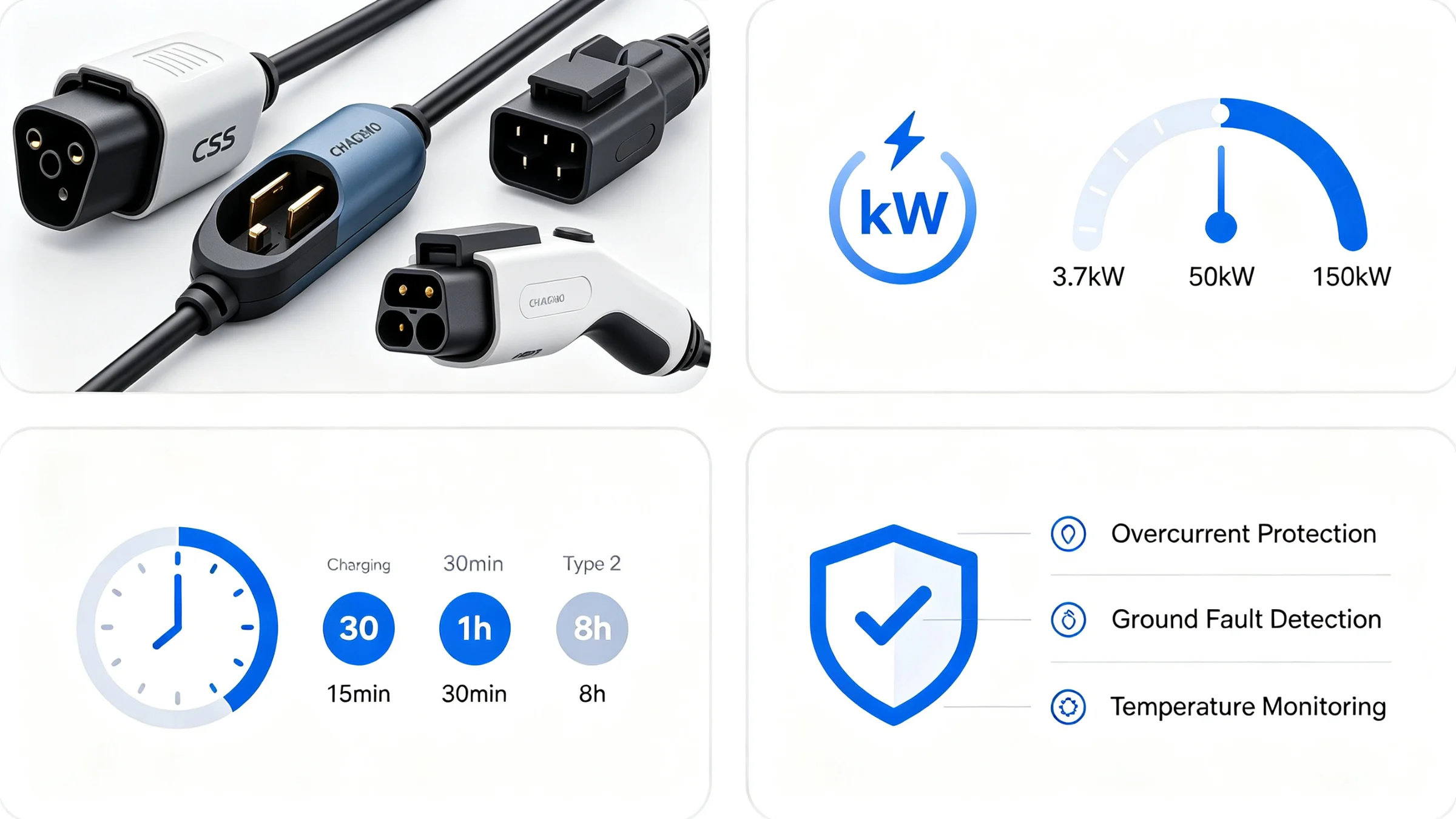
For example, Type 2 describes a connector, while Mode 3 describes a charging method.
This distinction is important because the same connector does not necessarily tell you everything about how the charging system operates.
2. Mode 1: Basic AC Charging
Mode 1 is the simplest form of EV charging.
The vehicle is connected directly to a standard AC electrical outlet without dedicated communication and control equipment between the vehicle and the power supply.
Because of its limited control and protection capabilities, Mode 1 is not generally the preferred solution for modern EV charging.
For everyday EV charging, dedicated charging equipment provides a more controlled approach.
3. Mode 2: Charging With a Control Device
Mode 2 uses a standard electrical outlet together with a cable containing an in-cable control and protection device, commonly known as an IC-CPD.
This device provides additional monitoring and protection between the vehicle and the electrical supply.
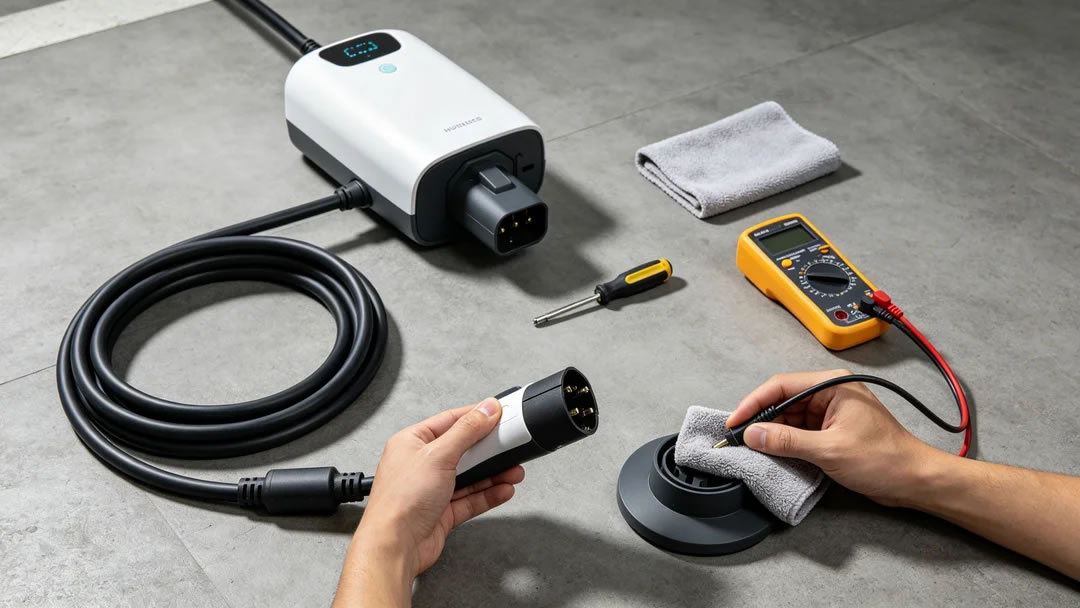
Mode 2 is often associated with portable EV charging cables.
It can be useful when dedicated charging equipment is not available, although charging power may be limited by the available electrical outlet and installation.
4. Mode 3: Dedicated AC EV Charging
Mode 3 is commonly associated with dedicated AC EV charging stations.
Instead of connecting the vehicle directly to a basic household outlet, the charging station provides controlled communication and safety functions between the electrical system and the vehicle.
Many home and public AC charging stations operate using Mode 3.
Depending on the charger and vehicle, Mode 3 charging can support different power levels, including common AC charging configurations such as 7kW, 11kW, and 22kW.
The actual charging power still depends on the vehicle, charger, and electrical installation.
5. Mode 4: DC Fast Charging
Mode 4 is fundamentally different from the first three modes.
With Mode 4, the conversion from AC to DC is handled by the external charging equipment rather than the vehicle's onboard AC charger.
This allows the charging station to supply DC power directly to the vehicle's battery system under controlled conditions.
Mode 4 is therefore commonly associated with DC fast charging.
Public DC charging stations can provide significantly higher power than typical home AC chargers, making them suitable for situations where drivers need to add energy in a shorter period.
6. AC Charging vs. DC Charging
The easiest way to understand the difference is to look at where the AC-to-DC conversion takes place.
AC Charging
For AC charging, electricity is supplied to the vehicle as AC.
The vehicle's onboard charger converts the AC electricity into DC energy that can be stored in the battery.
Common applications include:
- Home charging
- Workplace charging
- Residential parking
- Destination charging
DC Charging
With DC charging, the conversion equipment is located inside the charging station.
The charger supplies DC electricity to the vehicle's battery system under the appropriate charging controls.
Common applications include:
- Highway charging
- Public fast-charging stations
- Commercial charging sites
- Long-distance travel
7. Charging Mode vs. Charging Connector
These two concepts are easy to confuse.
| Concept | What It Describes | Examples |
|---|---|---|
| Charging Mode | How the charging system operates | Mode 2, Mode 3, Mode 4 |
| Connector Type | Physical connection between charger and EV | Type 1, Type 2, CCS |
| Charging Power | Maximum electrical power | 7kW, 11kW, 22kW, 60kW |
A complete EV charging solution depends on all of these factors.
For example, a home AC charger may use Mode 3 together with a Type 2 connector and provide a certain maximum AC charging power.
8. Which Charging Mode Is Best?
There is no single charging mode that is best for every situation.
Mode 2 can be useful when portability and flexibility are important.
Mode 3 is generally more suitable for regular home, workplace, and public AC charging because it is designed around dedicated charging equipment.
Mode 4 is useful when faster DC charging is needed, particularly for public and long-distance charging.
The best choice depends on the vehicle, electrical installation, charging location, driving habits, and required charging speed.
Quick Comparison
| Charging Mode | Typical Use | Power Source | Typical Scenario |
|---|---|---|---|
| Mode 1 | Basic charging | AC outlet | Limited/basic applications |
| Mode 2 | Portable charging | AC outlet + control device | Temporary or flexible charging |
| Mode 3 | Dedicated AC charging | AC charging station | Home, workplace, public AC |
| Mode 4 | DC charging | DC charging station | Fast public charging |
EV charging modes provide a useful way to understand how different charging systems work.
Mode 1 represents basic direct AC charging, while Mode 2 adds an in-cable control and protection device. Mode 3 uses dedicated AC charging equipment, and Mode 4 is associated with external DC charging equipment.
For EV owners, understanding these differences makes it easier to compare charging solutions and choose equipment that matches their vehicle and daily charging needs.
Rather than focusing only on charging speed or power, it is better to consider the complete charging system—including the charging mode, connector, electrical installation, and vehicle compatibility.
 September 14, 2026