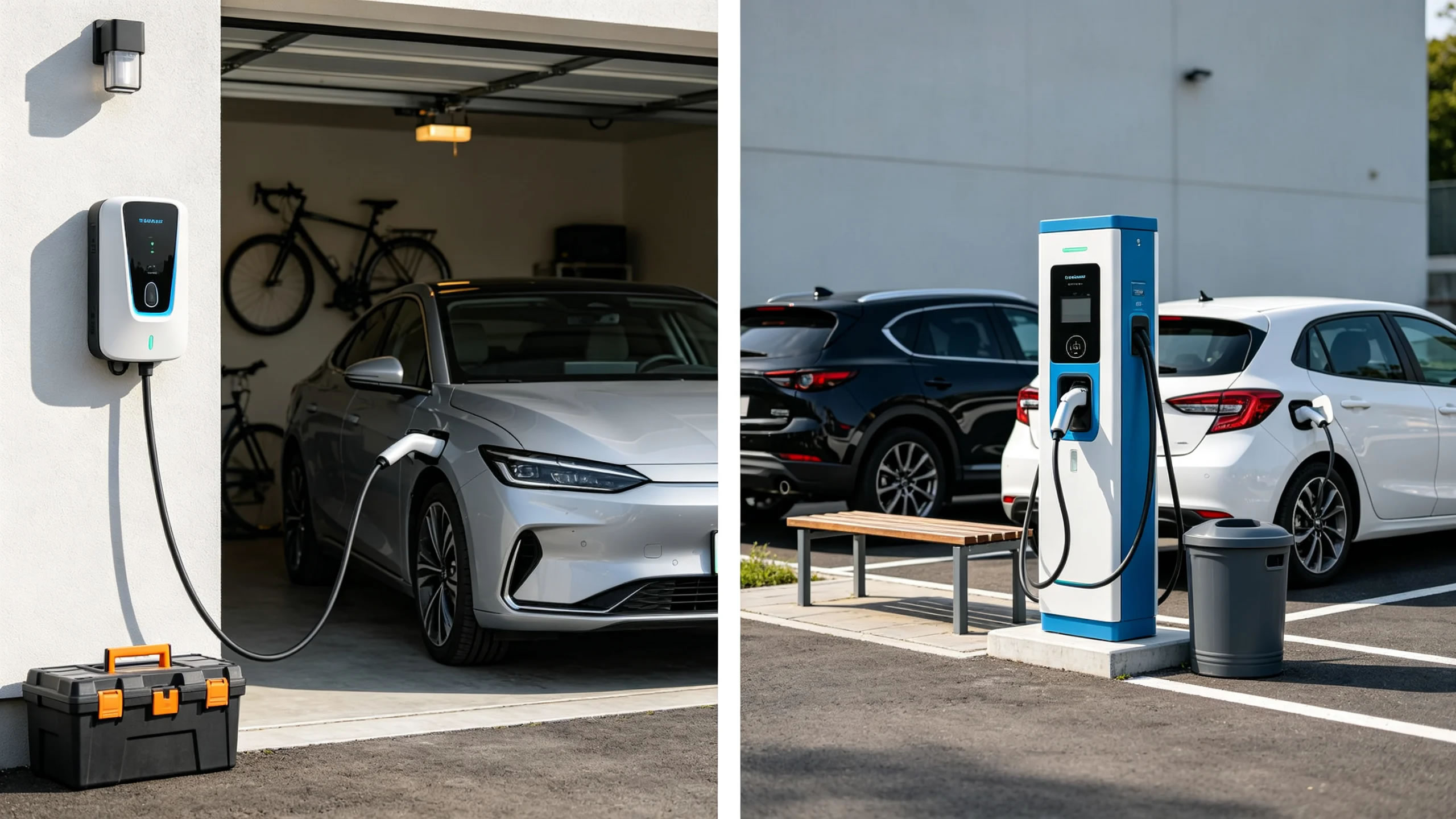
For EV owners, charging is part of everyday driving. Some drivers mainly charge at home, while others rely on public charging stations. Many people also use a combination of both.
So, what is the difference between home and public charging, and which option is more suitable?
The answer depends on your driving habits, parking situation, charging speed requirements, electricity costs, and access to charging infrastructure.
1. What Is Home EV Charging?
Home charging means charging your electric vehicle at your residence, usually in a private garage, driveway, or designated parking space.
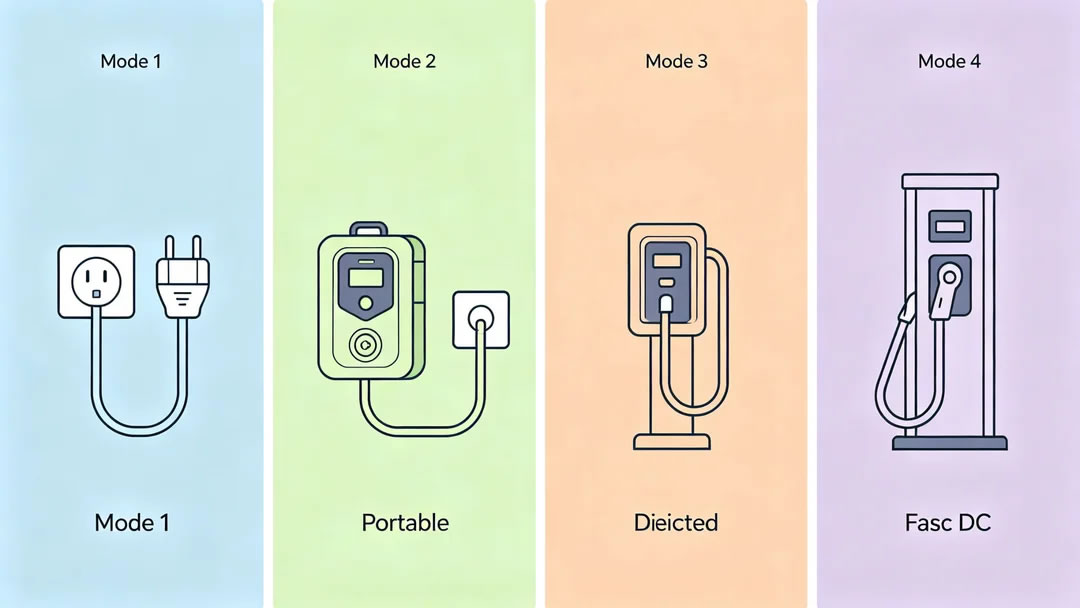
Depending on the electrical installation and charger, home charging can use a standard outlet or a dedicated AC EV charger.
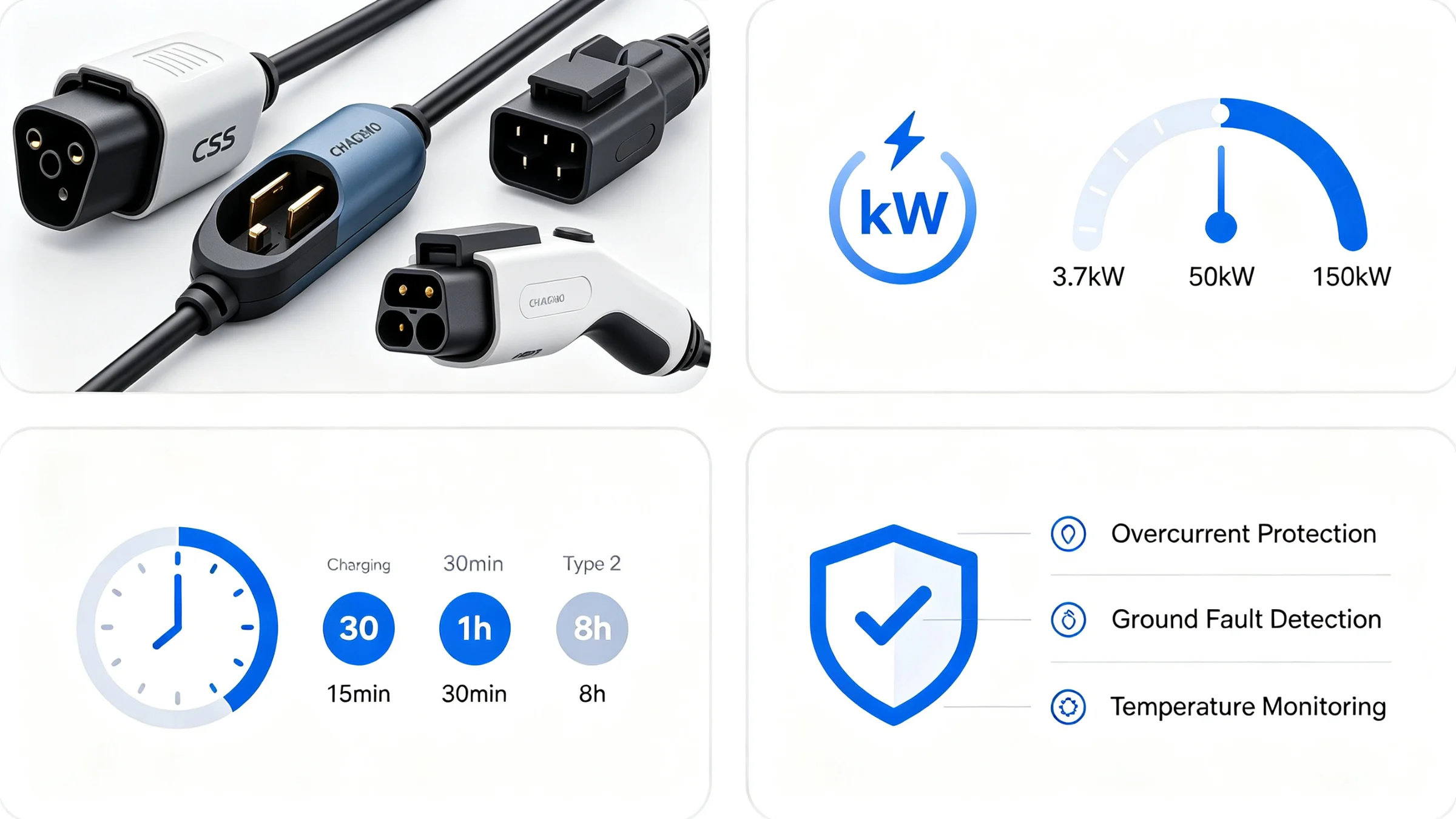
Dedicated home chargers commonly provide charging power such as:
- 3.5kW
- 7kW
- 11kW
- 22kW
The actual charging power depends on the charger, vehicle, and available electrical supply.
For drivers who regularly park at home for several hours, overnight charging can provide a convenient way to add energy without making a separate trip to a charging station.
2. What Is Public EV Charging?
Public charging stations are available in locations such as:
- Shopping centers
- Office buildings
- Parking facilities
- Service areas
- Highway rest stops
- Gas stations and charging hubs
Public chargers can include both AC and DC charging equipment.
AC public chargers may offer moderate charging power, while DC fast chargers can provide substantially higher power for drivers who need to recharge during a shorter stop.
Availability and charging power vary considerably between locations.
3. Charging Speed
One major difference is charging speed.
A home AC charger may provide relatively moderate power, making it suitable for charging over several hours.
Public DC fast chargers can provide much higher power, potentially allowing an EV to add a significant amount of energy during a shorter stop.
However, the charging speed shown on the charger is not necessarily the speed the vehicle will actually receive.
The vehicle's maximum charging capability, battery condition, temperature, charger capacity, and other factors all affect the actual charging rate.
4. Charging Cost
The cost of charging depends on where and when you charge.
Home Charging
Home charging costs are generally related to the local residential electricity rate and the amount of energy consumed.
A simple calculation is:
Charging Cost = Electricity Used × Electricity Price
For example, if an EV uses 40kWh and electricity costs $0.15 per kWh:
40 × $0.15 = $6
Actual household electricity prices vary by country, region, provider, and tariff.
Public Charging
Public charging stations may use different pricing models, including:
- Price per kWh
- Price per minute
- Fixed session fees
- Subscription plans
- Parking or idle fees
Some charging networks may also have different prices depending on location, charging power, or time of use.
Therefore, public charging costs should be checked before starting a charging session.
5. Convenience
Home charging offers a major convenience advantage for people who have reliable parking and suitable electrical infrastructure.
You can connect the vehicle after arriving home and leave it charging while you sleep or work.
Public charging provides a different type of convenience. It can be particularly useful when:
- You are traveling
- You do not have home parking
- Your battery level is low
- You need faster charging
- You are away from your normal charging location
For many EV owners, the two options complement each other rather than compete with each other.
6. What About Drivers Without Private Parking?
Not every EV owner has access to a private parking space.
Apartment residents and people who park on public streets may have limited access to home charging.
In these situations, public charging can become an important part of everyday EV use.
Other possibilities may include:
- Workplace charging
- Shared residential chargers
- Destination charging
- Community charging stations
- Public AC charging
The most suitable solution depends on what charging infrastructure is available in the local area.
7. AC Charging or DC Fast Charging?
Another important consideration is the difference between AC and DC charging.
AC charging is often suitable when the vehicle will remain parked for a longer period.
DC fast charging is more useful when charging time is limited.
For example:
| Situation | Potentially Suitable Option |
|---|---|
| Overnight at home | Home AC charging |
| Several hours at work | AC charging |
| Shopping or dining | Destination AC charging |
| Long-distance trip | DC fast charging |
| Need to charge quickly | DC fast charging |
| No home charging access | Public charging |
These are general examples rather than fixed rules. Actual charging choices depend on the vehicle and local infrastructure.
8. Using Both Can Be Practical
Many EV drivers do not need to choose only one charging method.
A common pattern is:
Home charging for routine use + public charging for travel and unexpected needs.
For example, a driver may use a home charger during the week and use a public DC fast charger during a long-distance trip.
This approach can combine the convenience of regular charging with the flexibility of public infrastructure.
9. What Should You Consider Before Choosing?
Before deciding how you will charge your EV, consider these questions:
- Do you have a private parking space?
- Can a dedicated EV charger be installed?
- How many kilometers do you normally drive each day?
- How long is the vehicle usually parked?
- Are public charging stations easily available nearby?
- How often do you make long-distance trips?
- What are the local home and public charging prices?
- What charging power does your vehicle support?
The answers will give you a clearer picture of which charging options fit your daily routine.
Quick Comparison
| Factor | Home Charging | Public Charging |
|---|---|---|
| Convenience | High if parking is available | Depends on station availability |
| Typical charging | AC | AC or DC |
| Charging speed | Usually moderate | Can range from moderate to very fast |
| Cost | Based mainly on home electricity tariff | Depends on charging network |
| Availability | Requires suitable parking and installation | Depends on local infrastructure |
| Best suited for | Routine charging | Travel, fast charging, or users without home charging |
Home and public charging serve different purposes in the EV ecosystem.
Home charging can be convenient for regular overnight or long-duration charging, while public charging provides flexibility for drivers who travel, do not have home charging access, or need faster charging.
There is no single charging method that fits every EV owner.
The practical approach is to consider your parking situation, driving distance, charging time, vehicle capability, local electricity prices, and availability of public charging stations.
Understanding these factors can help you build a charging routine that fits your actual needs.
 September 17, 2026