Installing an EV charger at home is more than choosing a charger with the right power rating. The home's electrical system also needs to support the charging load safely and reliably.
Before installation, EV owners should understand a few basic requirements, including voltage, current, wiring, circuit protection, grounding, and available electrical capacity.
1. Check the Electrical Supply
The first step is to understand the electrical supply available at your home.
Common specifications include:
- Voltage (V) — the electrical supply voltage
- Current (A) — the amount of electrical current available
- Frequency (Hz) — the AC electrical frequency
- Phase — single-phase or three-phase supply
Different countries and properties use different electrical configurations, so an EV charger should be selected according to the local electrical system.
2. Match the Charger Power to the Electrical System
The charger power should not be considered separately from the available electrical capacity.
For example, a 7kW AC charger operating around 230V may require approximately 32A.
A higher-power charger can require significantly more current, particularly when operating continuously for several hours.
The home's main electrical supply must therefore have enough capacity for EV charging along with other appliances operating at the same time.
A qualified electrician can assess whether the existing system is suitable.
3. Use a Dedicated Circuit
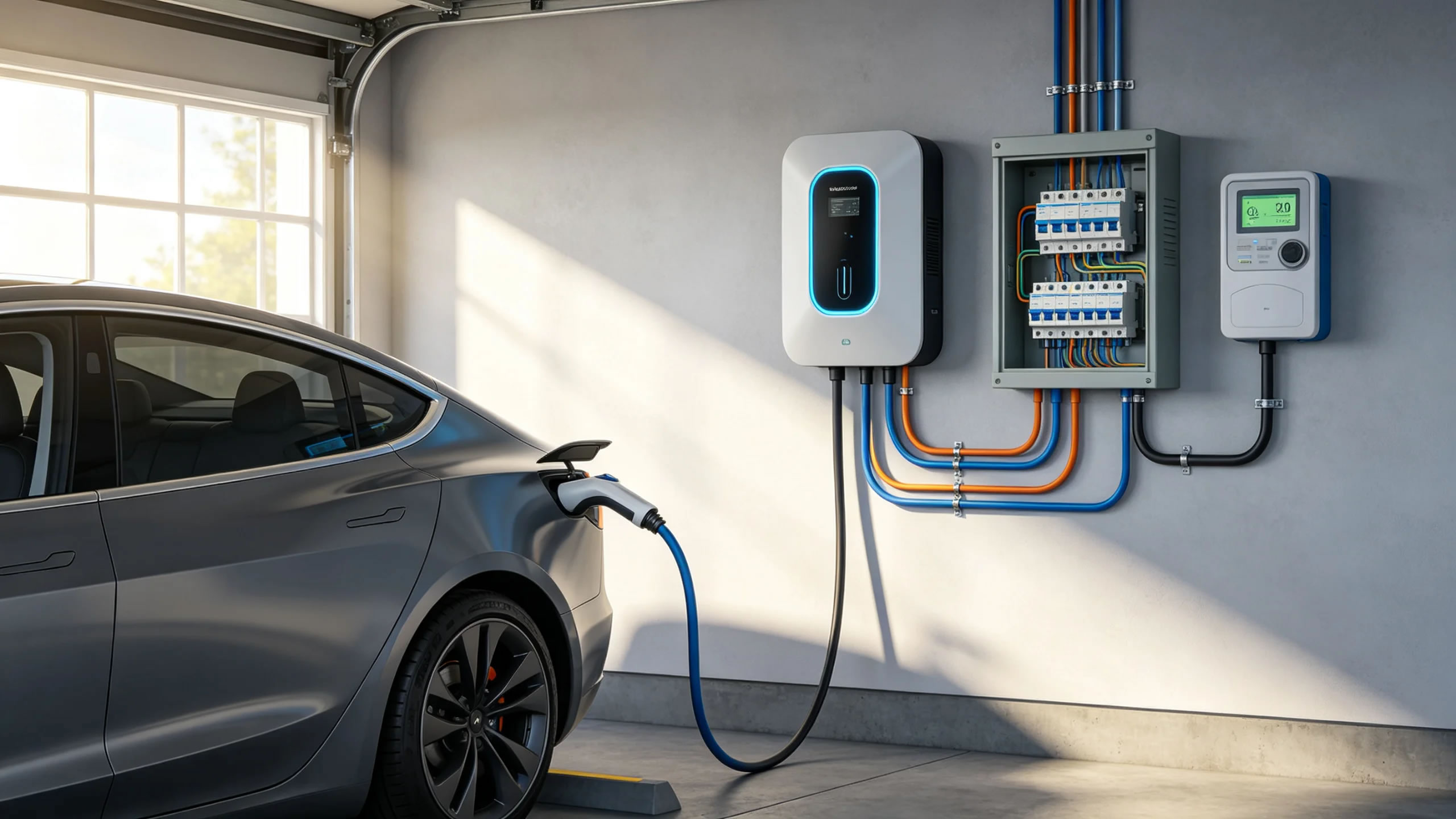
A dedicated circuit is commonly recommended for a permanently installed EV charger.
This means the charger has its own electrical circuit rather than sharing the same circuit with household appliances.
A dedicated circuit can help provide:
- More stable charging
- Appropriate circuit protection
- Easier maintenance
- Better management of continuous electrical loads
The exact wiring and protection requirements depend on the charger, installation method, and local electrical regulations.
4. Circuit Protection Matters
EV chargers should be installed with appropriate electrical protection.
Depending on the installation and local requirements, this may include:
- Circuit breakers
- Residual-current protection
- Overcurrent protection
- Surge protection
- Grounding protection
The required protection is not identical for every charger or country.
Always follow the manufacturer's installation instructions and applicable local electrical standards.
5. Don't Ignore Grounding
Proper grounding is an important part of an EV charging installation.
It provides a controlled path for fault current and works together with the charger's protective systems.
A charger should not simply be connected to an electrical outlet without confirming that the electrical installation meets the required safety standards.
If you are unsure about the grounding condition of an existing installation, have it inspected by a qualified electrician.
6. Consider Other Household Loads
EV charging can be a significant continuous electrical load.
Before installation, consider what else may operate at the same time:
- Air conditioning
- Electric heating
- Water heaters
- Ovens
- Washing machines
- Solar systems
- Other large electrical equipment
For example, a home may technically have enough capacity for a 7kW charger, but using the charger at maximum power while several high-power appliances are operating could approach the property's electrical limit.
Some smart chargers support dynamic load management, which can automatically adjust charging power according to the available electrical capacity.
7. When Should You Upgrade the Electrical System?
An electrical upgrade may be necessary if:
- The existing service has insufficient capacity
- The electrical panel is outdated
- The wiring cannot support the required load
- Additional protection equipment is required
- A higher-power charger is being installed
An upgrade is not automatically required for every EV charger installation. The decision should be based on an actual assessment of the existing electrical system.
Quick Checklist
| Item | What to Check |
|---|---|
| Voltage | Compatible with the charger |
| Current | Enough capacity for charging |
| Phase | Single-phase or three-phase |
| Wiring | Suitable for continuous load |
| Circuit | Dedicated circuit where required |
| Protection | Appropriate electrical protection |
| Grounding | Meets local requirements |
| Main capacity | Enough for charger + household loads |
| Load management | Useful where capacity is limited |
A home EV charger should be treated as part of the home's electrical system, not simply as another household appliance.
Before installation, check the available electrical supply, charger power, wiring, circuit protection, grounding, and total household load.
Most importantly, electrical installation work should be carried out by a qualified professional and in accordance with local regulations and the charger's installation requirements.
Choosing the right charger is only the first step. Making sure the electrical system can support it is equally important.
 September 21, 2026