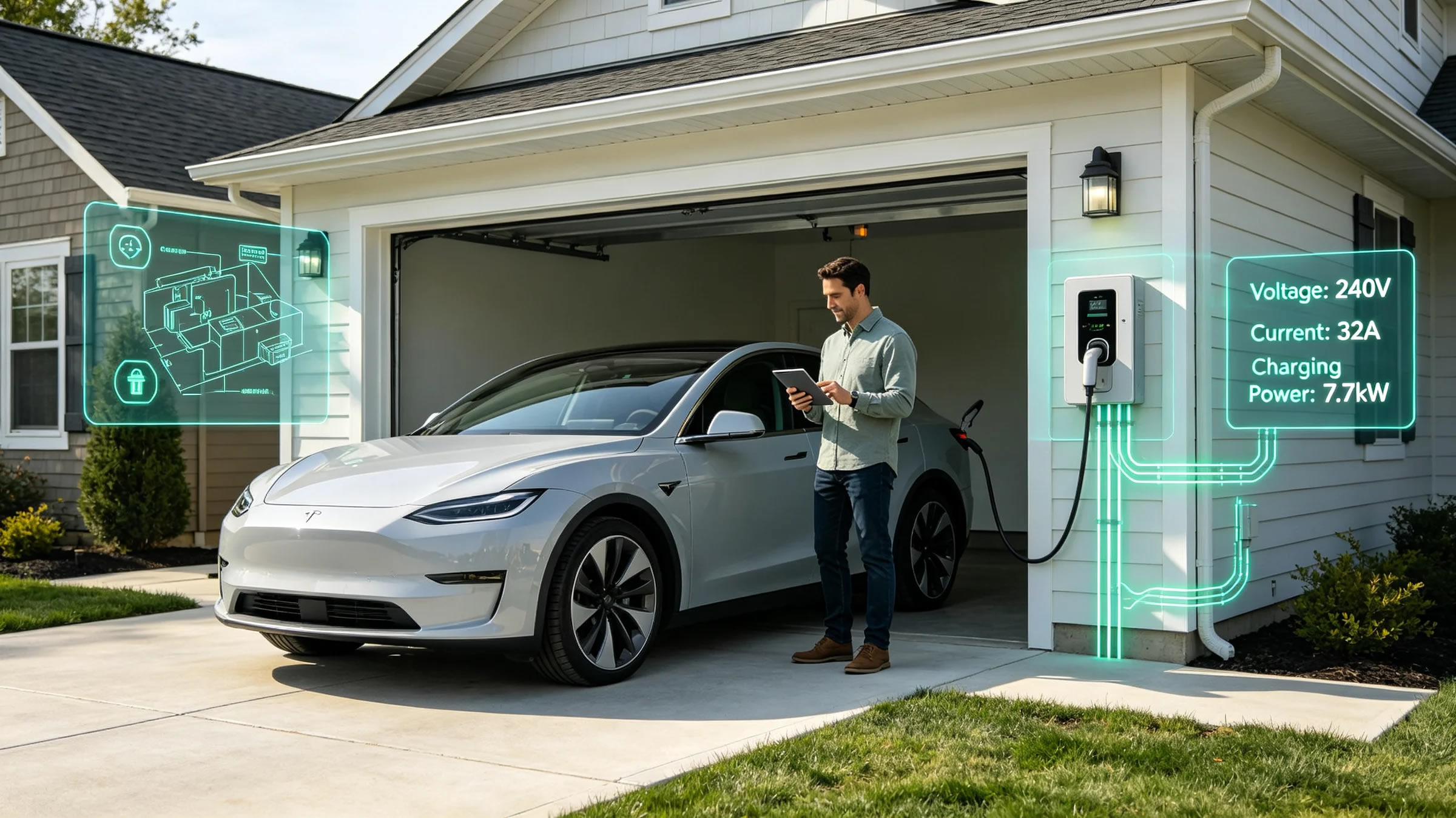
Installing a home EV charger can make electric vehicle ownership more convenient, but choosing the right location and electrical setup is just as important as choosing the charger itself. Before installation, EV owners should consider the available electrical capacity, charger power, cable routing, installation environment, and required safety protection.
A properly installed EV charger can provide reliable daily charging while reducing unnecessary electrical risks. This guide explains the main factors to consider before installing an EV charger at home.
1. Check Your Home's Electrical System
The first step is to understand the electrical system available at your property.
Important factors include:
- Supply voltage
- Single-phase or three-phase power
- Available electrical capacity
- Existing circuit configuration
- Distance between the electrical panel and parking location
Different chargers require different electrical conditions.
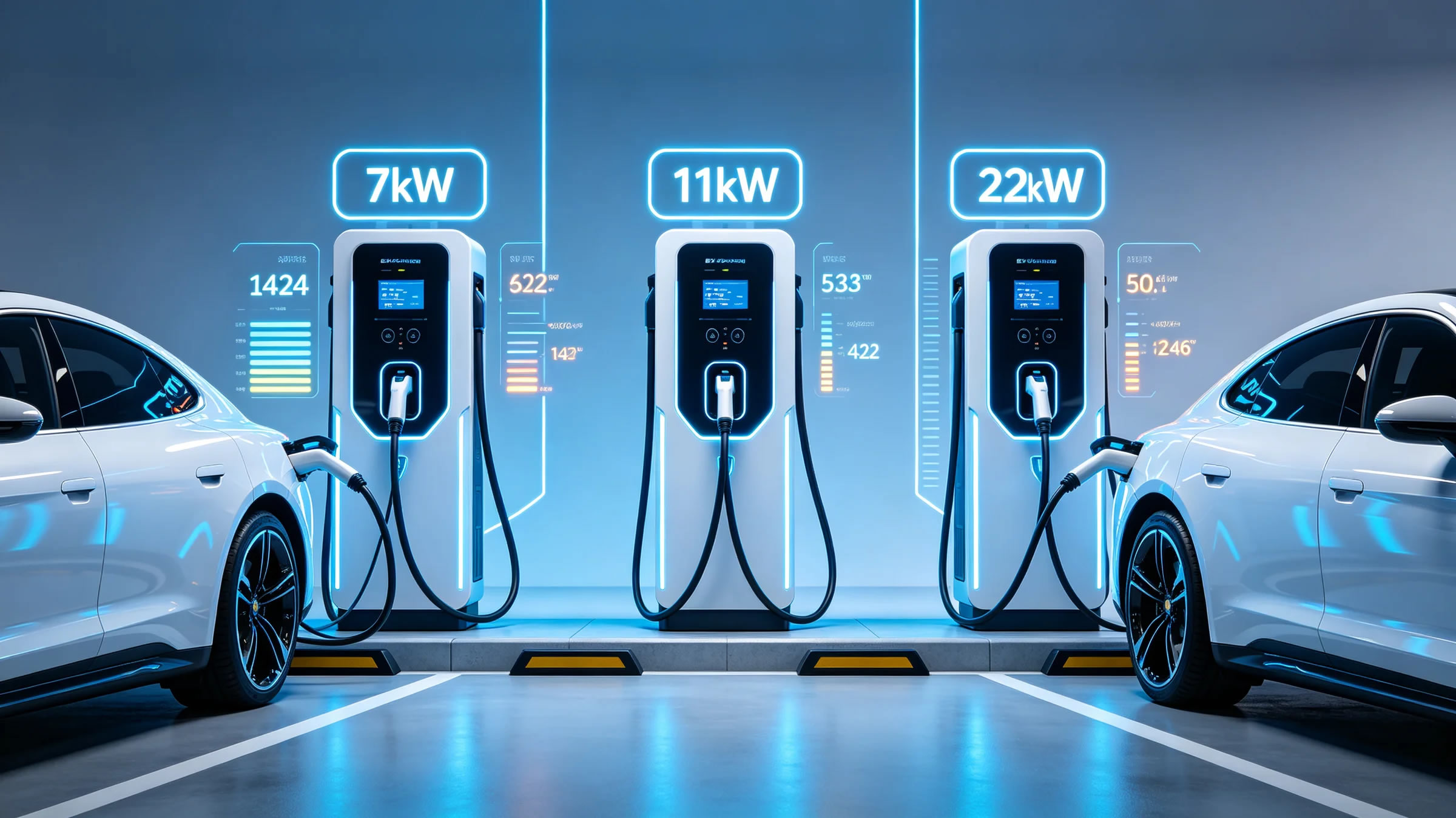
For example, a typical 7kW AC charger can often work with a suitable single-phase supply, while higher-power 11kW or 22kW charging generally requires a compatible three-phase electrical system.
However, requirements vary by country and installation environment, so the electrical system should be assessed by a qualified professional before installation.
2. Choose the Right Installation Location
The charger should be installed in a convenient and safe location.
Common installation areas include:
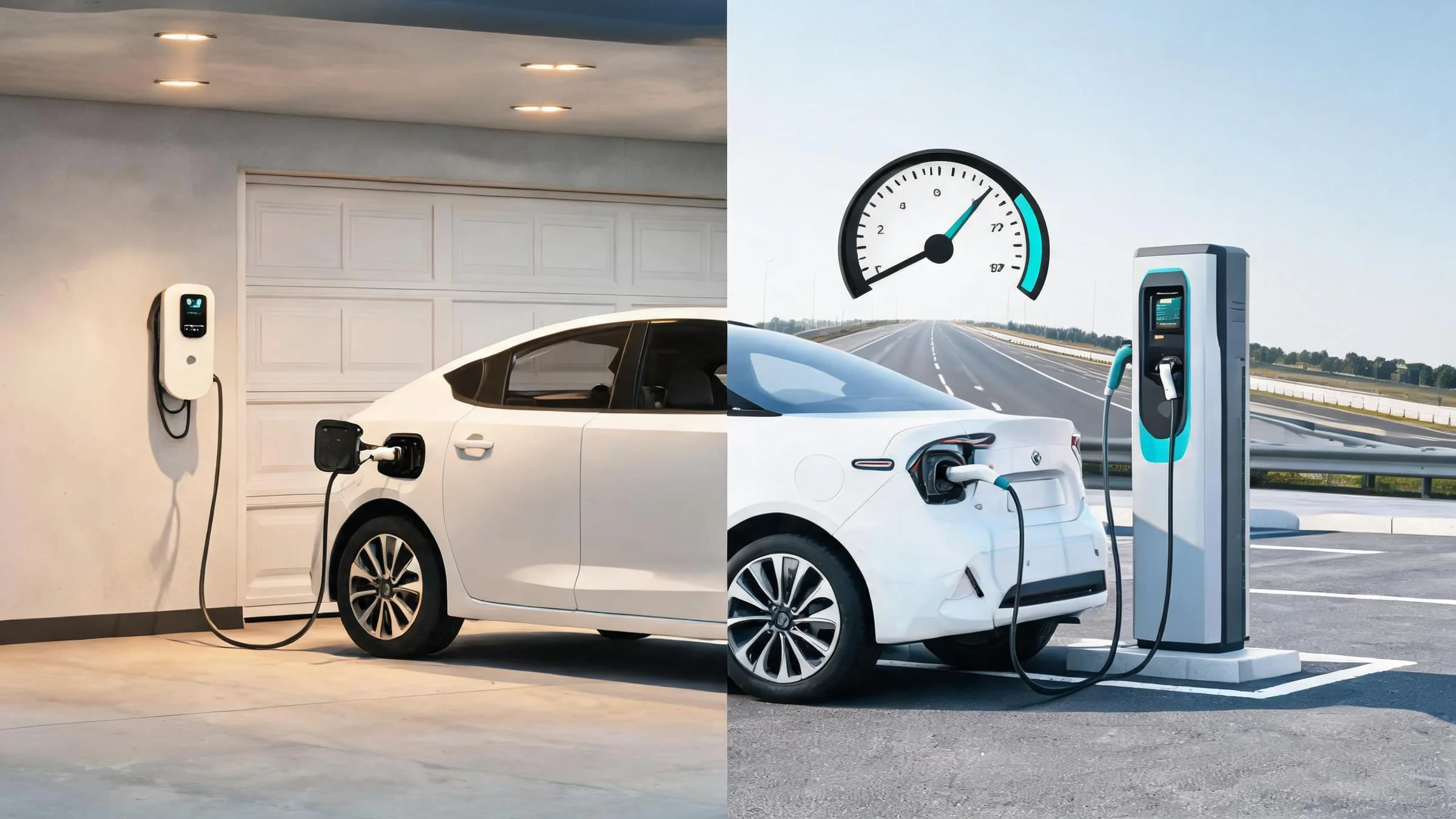
Garage
A garage provides protection from weather and can make cable management easier.
Driveway
Outdoor installation can be convenient when the vehicle is parked outside, but the charger should be appropriately rated for outdoor use.
Parking Area
For shared or dedicated parking spaces, the charger should be positioned so that the charging cable can reach the vehicle without creating a trip hazard.
When choosing a location, consider:
- Vehicle parking position
- Cable length
- Wall strength
- Weather exposure
- Drainage
- Accessibility
3. Consider the Charging Power
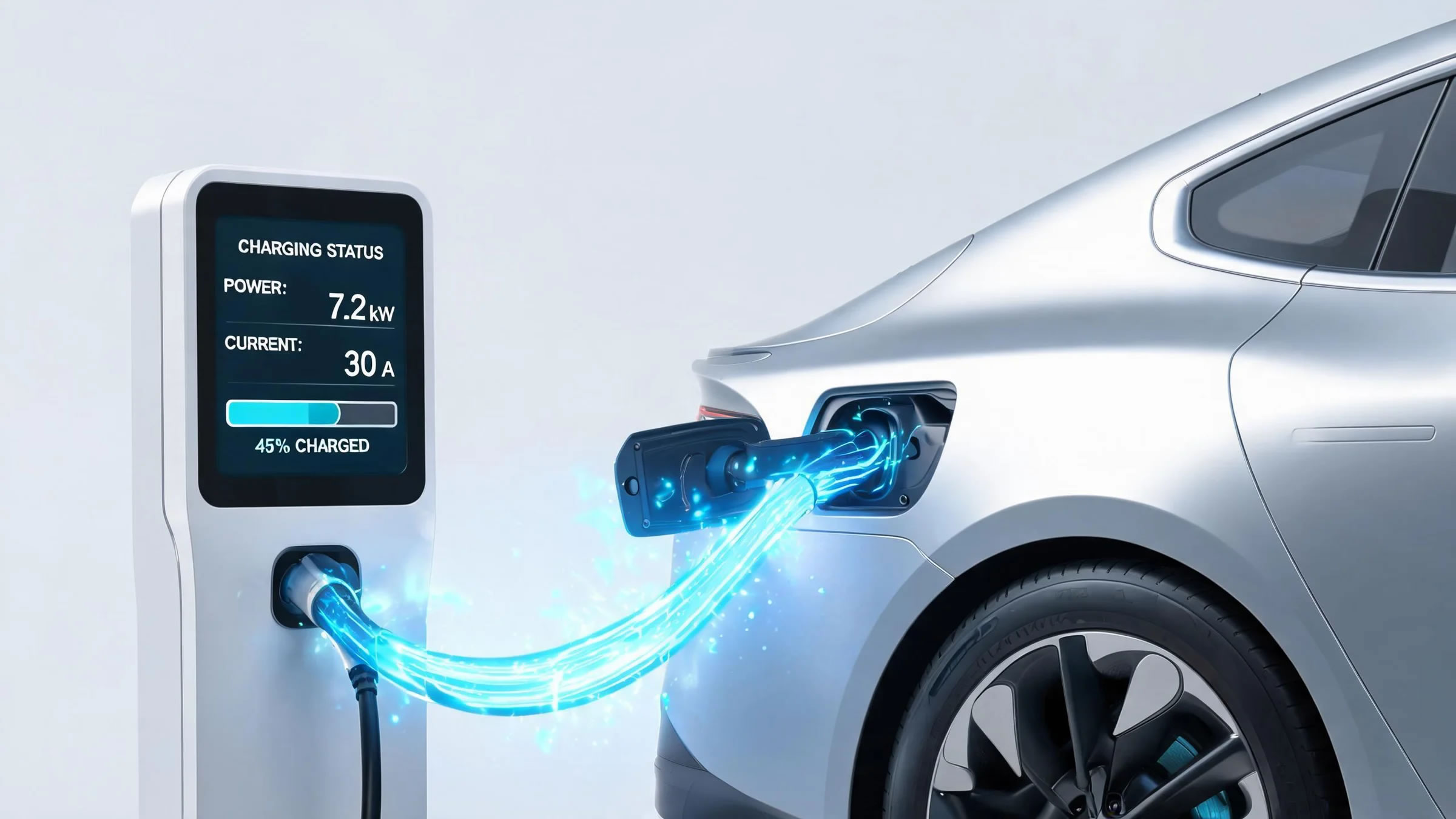
The charger's power rating affects both charging speed and installation requirements.
| Charger Power | Typical Application | Electrical Consideration |
|---|---|---|
| 3.5kW | PHEV / low mileage | Lower electrical demand |
| 7kW | Home charging | Common residential solution |
| 11kW | Faster home charging | Usually requires three-phase |
| 22kW | High-power AC charging | Requires suitable three-phase capacity |
Higher charging power is not automatically better.
The charger should match:
Vehicle capability + electrical capacity + daily charging requirements
4. Check Your Vehicle's Charging Capability
Before installation, check the maximum AC charging power supported by your vehicle.
For example, if your EV's onboard AC charger supports a maximum of 11kW, installing a 22kW AC charger will not necessarily make the vehicle charge at 22kW.
The actual charging speed may be limited by:
- Vehicle onboard charger
- Battery condition
- Battery temperature
- State of charge
- Charger power
- Electrical supply
Therefore, both the vehicle and charger need to be considered as part of the same system.
5. Electrical Protection Is Essential
Safety should be one of the highest priorities during installation.
Depending on local electrical regulations and the charger design, an installation may require appropriate protection such as:
Overcurrent Protection
Protects the circuit from excessive current.
Residual Current Protection
Helps detect abnormal leakage current and reduce electrical hazards.
Surge Protection
Can help protect electrical equipment against certain voltage surges.
Grounding
A proper grounding system is essential for electrical safety.
The exact protection requirements depend on the country, electrical system, and charger design.
6. Cable Management Matters
Charging cables carry relatively high electrical power, so cable routing should be planned carefully.
Avoid:
- Loose cables across walking areas
- Sharp bends
- Areas exposed to vehicle tires
- Unprotected cable connections
- Improvised extension cables
The charging cable should be long enough to reach the vehicle comfortably but should not create unnecessary clutter.
Good cable management improves both safety and everyday convenience.
7. Outdoor Installation Requires Additional Considerations
If the charger is installed outdoors, environmental protection becomes more important.
Consider:
- Water exposure
- Dust
- Temperature
- Direct sunlight
- Snow or heavy rain
- Physical impact
An outdoor charger should have an appropriate enclosure and environmental protection rating.
For example, an IP-rated enclosure can indicate the level of protection against dust and water ingress.
However, the IP rating should not be considered the only measure of outdoor suitability.
8. Do You Need a Professional Installer?
In most cases, installing a dedicated EV charging circuit is not a simple plug-and-play project.
A qualified electrician can evaluate:
- Existing electrical capacity
- Circuit requirements
- Cable size
- Protection devices
- Grounding
- Local regulations
- Installation location
Professional installation is particularly important for higher-power chargers and installations requiring electrical upgrades.
9. What Happens During a Typical Installation?
A typical installation may follow these steps:
Step 1 — Electrical Assessment
The installer checks the property's electrical system.
Step 2 — Charger Selection
The charger power and specifications are matched to the vehicle and electrical supply.
Step 3 — Installation Planning
The installer determines the mounting position and cable route.
Step 4 — Circuit Installation
A dedicated circuit and appropriate protection equipment are installed when required.
Step 5 — Charger Installation
The charger is securely mounted and connected.
Step 6 — Testing
The system is tested before being put into normal use.
Step 7 — User Setup
If the charger supports smart functions, the user may connect it to an app or energy management platform.
10. Common Mistakes to Avoid
Choosing Power Without Checking the Vehicle
A higher-rated charger does not guarantee faster charging.
Ignoring Electrical Capacity
The property must have sufficient capacity for the additional load.
Installing Too Far From the Parking Space
A poor location can make daily charging inconvenient.
Using Improvised Extension Solutions
EV charging should use an appropriate electrical installation rather than makeshift connections.
Ignoring Local Regulations
Electrical requirements vary between countries and regions.
11. A Simple Pre-Installation Checklist
Before installing a home EV charger, check:
☑ Vehicle AC charging capability
☑ Charger power rating
☑ Single-phase or three-phase supply
☑ Available electrical capacity
☑ Installation location
☑ Cable length and routing
☑ Electrical protection
☑ Indoor or outdoor environment
☑ Local installation requirements
☑ Qualified installer availability
Installing an EV charger is more than simply mounting a device on a wall and connecting a cable. A reliable charging system requires the charger, vehicle, electrical infrastructure, and installation environment to work together.
Before purchasing or installing a charger, EV owners should first understand their vehicle's charging capability and household electrical conditions. Choosing an appropriately powered charger and using a qualified installation service can help ensure safe, reliable, and convenient home charging for years to come.
As EV adoption continues to grow, professionally designed home charging infrastructure will become an increasingly important part of everyday electric mobility.
 August 12, 2026