One of the biggest advantages of owning an electric vehicle is the ability to charge at home. But how much does a full charge actually cost?
The answer depends on several factors, including the vehicle's battery capacity, local electricity price, charging efficiency, and how much energy the vehicle needs. Understanding these factors can help EV owners estimate their daily and monthly charging expenses and make better decisions about when and where to charge.
1. What Does kWh Mean?
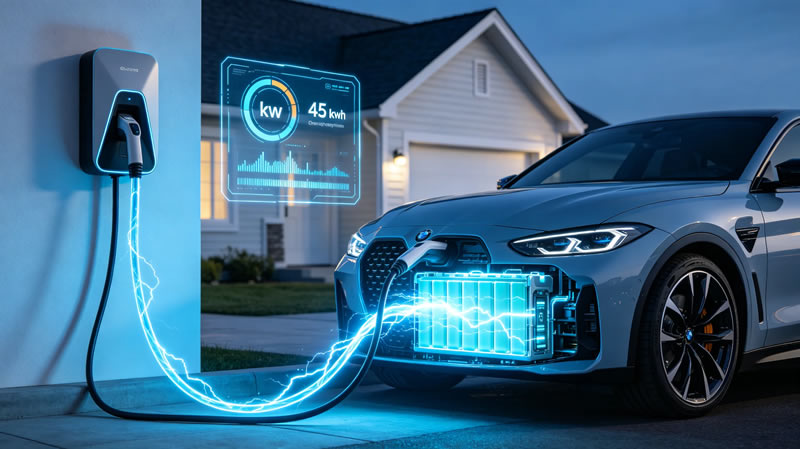
Electricity used to charge an EV is normally measured in kilowatt-hours (kWh).
A kWh represents the amount of electrical energy consumed over time.
For example, if a charger delivers 7kW of power for one hour, the theoretical energy delivered is approximately 7kWh.
This is different from kW.
- kW = charging power
- kWh = amount of energy consumed or stored
This distinction is important when calculating charging costs.
2. How Do You Calculate the Cost of Charging?
A simple calculation is:
Charging Cost = Electricity Used × Electricity Price
For example, if an EV uses 50kWh of electricity and the electricity price is $0.20 per kWh:
50 × $0.20 = $10
So the theoretical electricity cost would be approximately $10.
However, the actual amount of electricity drawn from the grid can be slightly higher because charging systems are not 100% efficient.
3. Battery Capacity vs Actual Charging Energy
An EV may have a battery capacity of 60kWh, but this does not always mean that exactly 60kWh will be drawn from the grid when charging from empty to full.
Some energy is lost during:
- AC-to-DC conversion
- Battery charging
- Cable transmission
- Battery temperature management
- Charging system operation
Therefore, the actual electricity consumed can be somewhat higher than the usable energy stored in the battery.
4. Does a Higher-Power Charger Cost More?
Not necessarily.
This is a common misunderstanding.
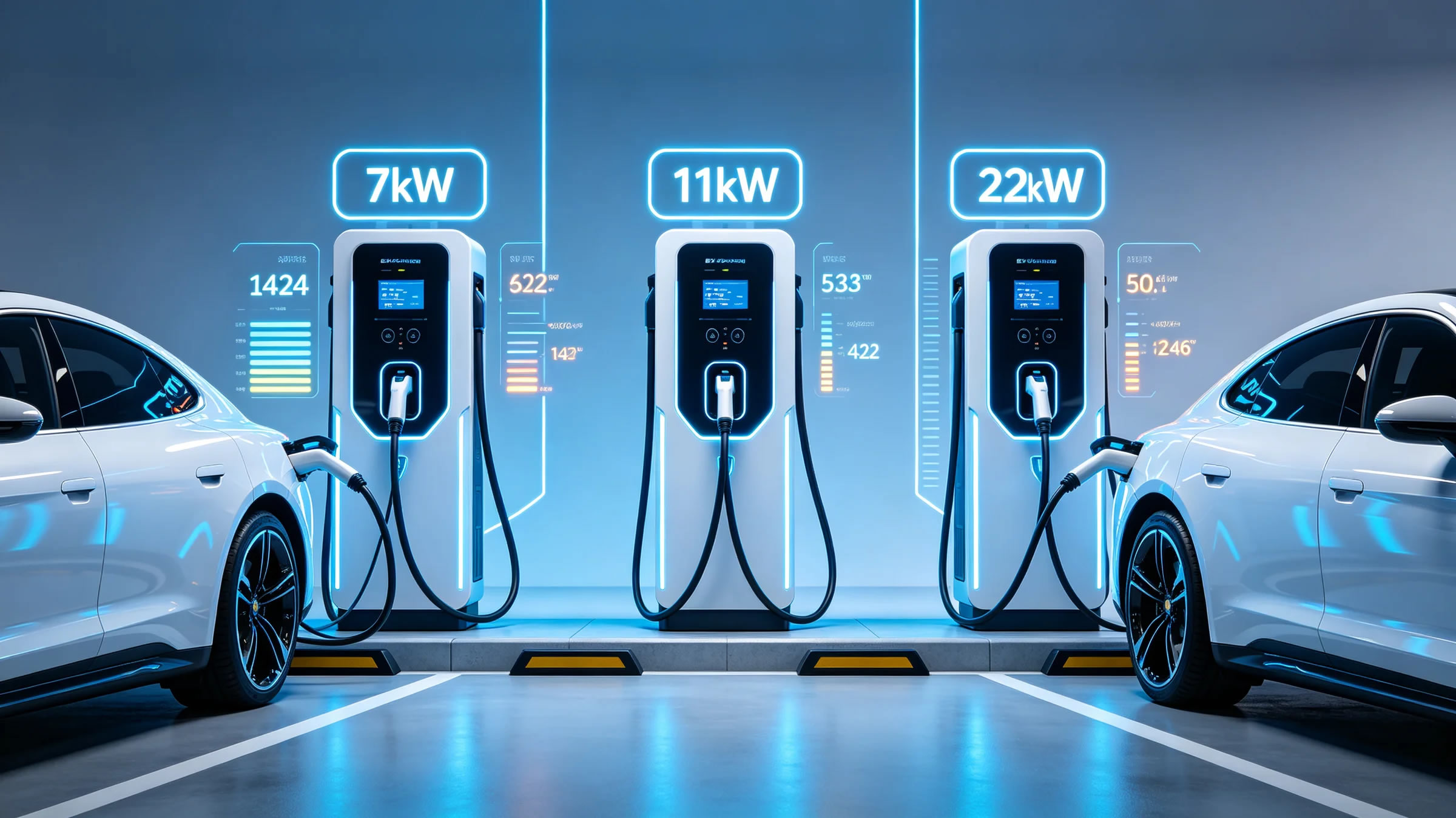
A 7kW charger and a 22kW charger may use approximately the same amount of electricity to add the same amount of energy to the battery.
The major difference is how quickly the energy is delivered.
For example:
- 7kW → slower charging
- 11kW → faster charging
- 22kW → even faster charging
If the vehicle ultimately receives the same amount of energy, the electricity cost is primarily determined by the amount of energy consumed and the electricity rate—not simply by the charger's maximum power rating.
Actual efficiency can vary between charging systems.
5. Example: Charging a 60kWh Battery
Consider an EV with a usable battery capacity of approximately 60kWh.
If the electricity price is $0.20/kWh, the theoretical cost of adding 60kWh would be:
60 × $0.20 = $12
If charging losses increase grid consumption to approximately 66kWh, the actual cost would be:
66 × $0.20 = $13.20
This is only an example. Actual charging efficiency and electricity prices vary depending on the vehicle, charger, environment, and location.
6. How Much Does Daily Charging Cost?
Daily cost depends heavily on driving distance.
Suppose an EV consumes approximately:
18kWh per 100km
If the driver travels 50km per day:
18 × 50 ÷ 100 = 9kWh
At an electricity price of $0.20/kWh:
9 × $0.20 = $1.80
The actual cost may be slightly higher because of charging losses.
This shows why EV charging costs are often better evaluated based on energy consumed per distance, rather than simply looking at battery size.
7. Home Charging vs Public Fast Charging
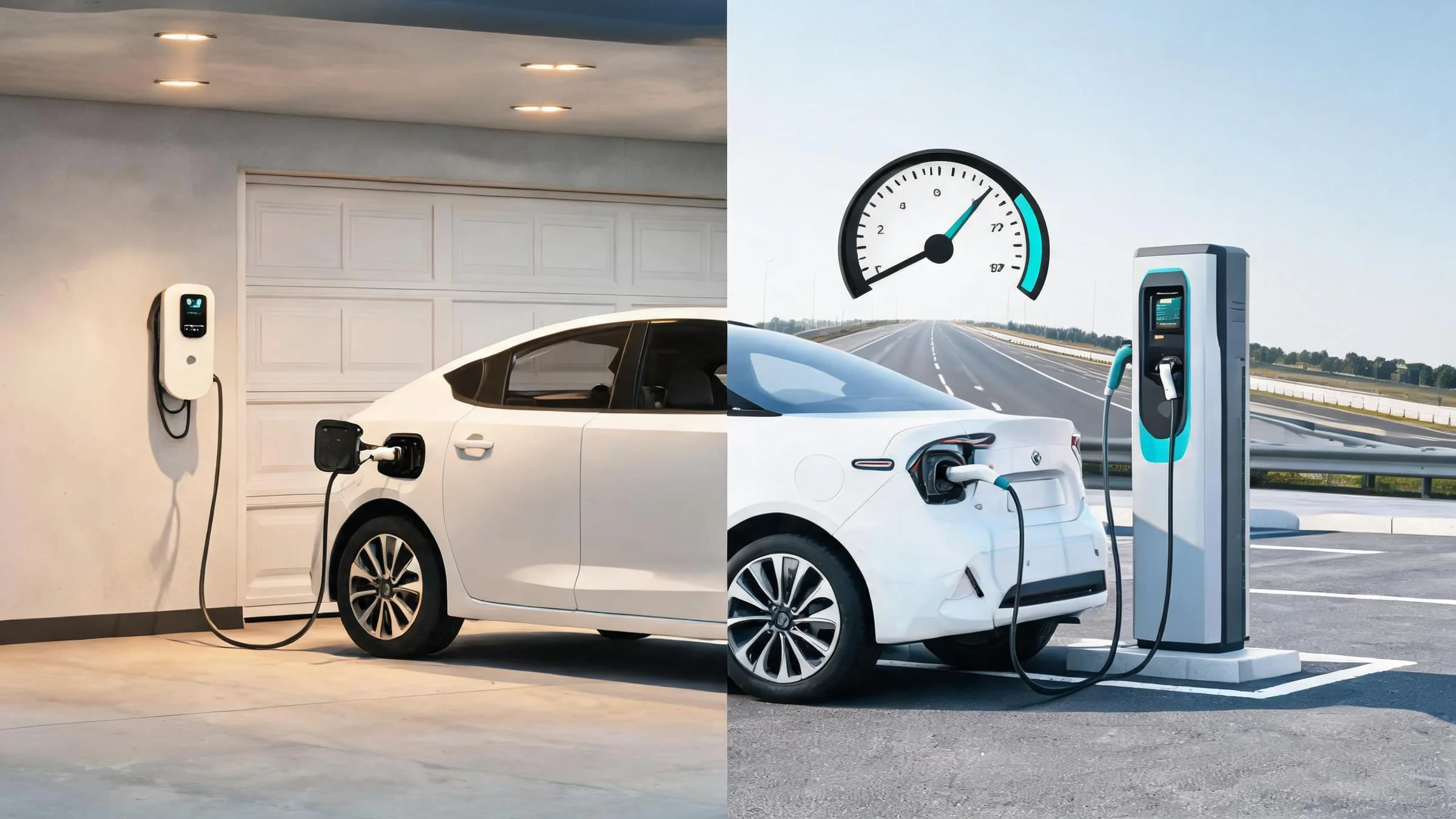
Home charging and public charging serve different purposes.
Home Charging
Advantages:
- Convenient
- Suitable for overnight charging
- Electricity prices may be lower
- Easy to integrate into daily routines
Home charging is particularly practical for drivers who have access to dedicated parking.
Public DC Fast Charging
Advantages:
- Much faster charging
- Useful during long-distance travel
- Suitable when home charging is unavailable
However, public charging prices may include additional costs such as:
- Energy charges
- Service fees
- Parking fees
- Time-based charges
Therefore, the total cost can be higher than residential charging depending on the location and charging network.
8. Can Charging at Night Reduce Costs?
In some markets, electricity prices vary depending on the time of day.
When time-of-use electricity pricing is available, charging during lower-cost periods can reduce the cost of home charging.
Smart EV chargers may support scheduled charging, allowing users to set a preferred charging period.
For example:
Vehicle plugged in → charging scheduled → lower-price period begins → charging starts automatically
However, electricity pricing structures vary by country and utility provider, so EV owners should check their local tariff.
9. How Much Does EV Charging Cost Per Month?
A simple estimate can be made using three factors:
Monthly Cost = Monthly Driving Distance × Energy Consumption per km × Electricity Price
For example, if a driver travels 1,000km per month and the vehicle consumes approximately 18kWh per 100km:
1,000 × 18 ÷ 100 = 180kWh
At $0.20/kWh:
180 × $0.20 = $36
Again, this is a simplified estimate and does not include charging losses or other potential fees.
10. What Factors Affect EV Charging Costs?
Several factors can change the actual cost.
Electricity Price
Different countries, regions, and utility plans can have significantly different electricity prices.
Vehicle Efficiency
A more efficient EV can travel further using the same amount of electricity.
Battery Size
Larger batteries require more energy to fully charge.
Charging Efficiency
Some energy is lost during the charging process.
Weather
Very cold or hot conditions can increase energy consumption because the vehicle may need additional heating or cooling.
Driving Style
High speeds, rapid acceleration, heavy loads, and frequent climate-control use can increase energy consumption.
11. How Can EV Owners Reduce Charging Costs?
Several simple habits can help reduce charging expenses.
Charge During Lower-Cost Periods
If your electricity plan offers time-of-use pricing, scheduled charging can help reduce costs.
Use Home Charging When Practical
Home charging may be more economical than public charging, depending on local electricity and charging-network prices.
Maintain Efficient Driving Habits
Smooth acceleration and moderate speeds can reduce energy consumption.
Avoid Unnecessary Charging
Charging based on actual driving needs can be more efficient than repeatedly charging to 100% without a practical reason.
Use Smart Charging Features
Smart charging can help automate charging schedules and monitor electricity consumption.
12. The Most Important Thing to Remember
The cost of EV charging is primarily connected to how much electricity the vehicle uses, not simply how powerful the charger is.
A useful way to think about it is:
Charger Power → Determines Charging Speed
Energy Consumption → Determines Electricity Usage
Electricity Price → Determines Charging Cost
Understanding these three concepts makes EV charging costs much easier to estimate.
Charging an EV at home can be relatively straightforward to understand once the basic relationship between kW, kWh, electricity consumption, and electricity prices is clear.
The cost of a charging session depends mainly on how much energy the vehicle needs and the price of electricity in the local market. Charger power primarily affects how quickly that energy is delivered.
By understanding energy consumption, charging efficiency, electricity tariffs, and smart charging options, EV owners can better estimate their daily and monthly charging expenses and choose a charging strategy that fits their driving habits.
As electric mobility continues to develop, smarter charging technologies and increasingly connected energy systems will make it easier for EV owners to manage both charging and energy consumption.
 August 15, 2026