By 2030, the way the world powers mobility will look fundamentally different.
The transition to electric vehicles will no longer be a question of “if” or even “how fast.” It will be a reality embedded into everyday life.
But the most profound change may not be the vehicles themselves.
It will be the invisible network that powers them.
Charging Becomes Invisible
In the early days of electric mobility, charging was a deliberate action.
Drivers had to search for stations, plan routes, and wait for their vehicles to recharge.
By 2030, this experience is expected to change dramatically.
Charging will become:
- Seamless
- Automated
- Integrated into daily environments
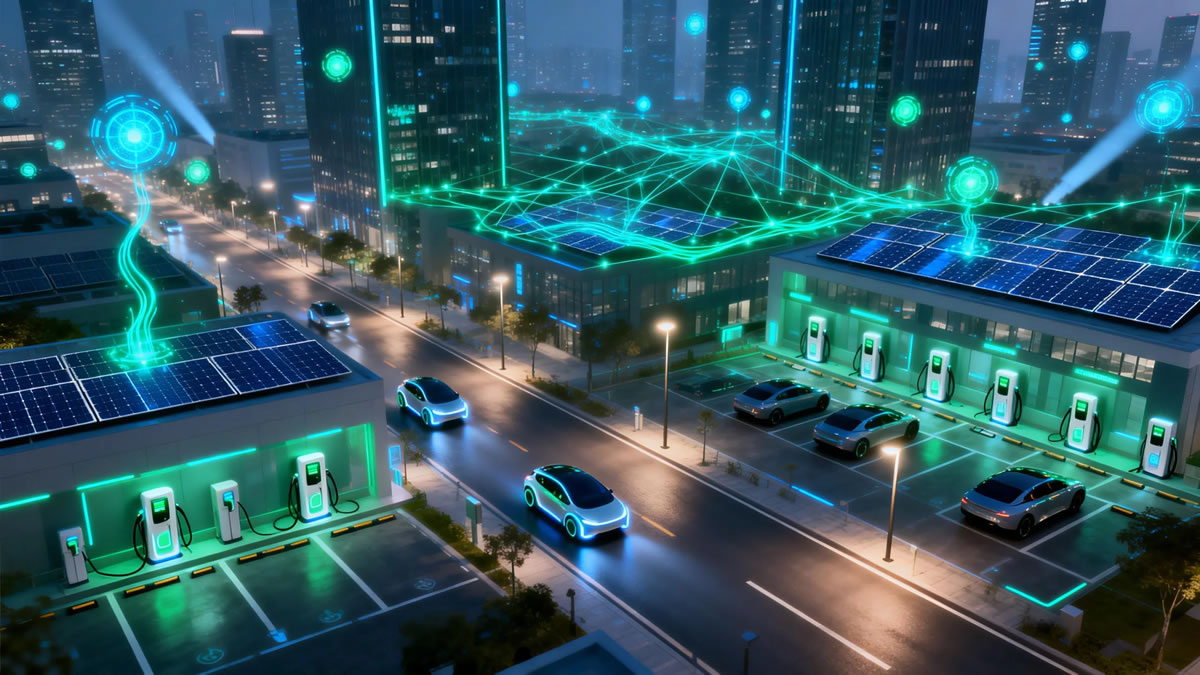
Homes, offices, shopping centers, and public spaces will all provide access to energy. In many cases, vehicles will charge while parked — without requiring conscious effort from users.
The act of “going to charge” may gradually disappear.
Ultra-Fast Charging Redefines Time
For situations where speed matters, ultra-fast charging will play a critical role.
Advancements in charging technology are expected to reduce charging times significantly, bringing them closer to the convenience of traditional refueling.
Highway corridors and intercity routes will be supported by high-power charging hubs, enabling long-distance travel with minimal interruption.
Time — once one of the biggest barriers to EV adoption — will become far less relevant.
A Fully Connected Energy Network
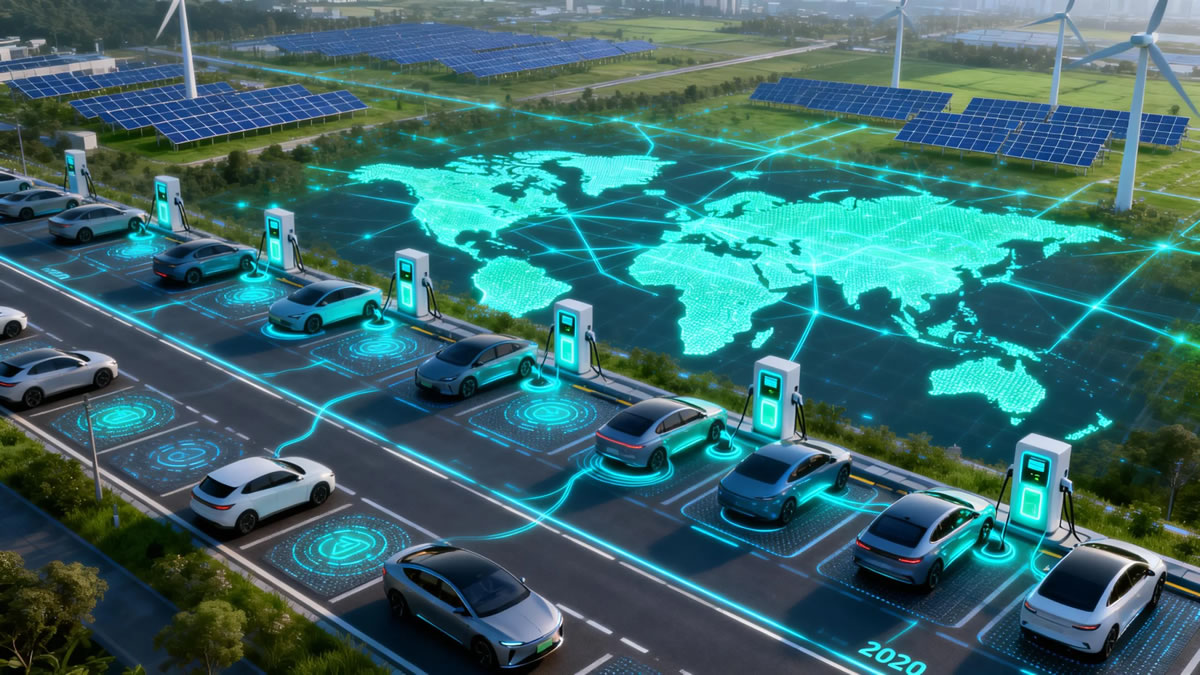
By 2030, charging infrastructure will not operate in isolation.
It will be part of a fully connected energy network.
In this network:
- Charging stations communicate with the grid
- Vehicles interact with infrastructure
- Data flows continuously across systems
Energy distribution will be optimized in real time, balancing supply and demand across regions.
This interconnected system will function more like a digital network than a traditional utility.
Integration with Renewable Energy
The global push toward renewable energy will reshape how electricity is generated and consumed.
Charging networks will play a key role in this transition.
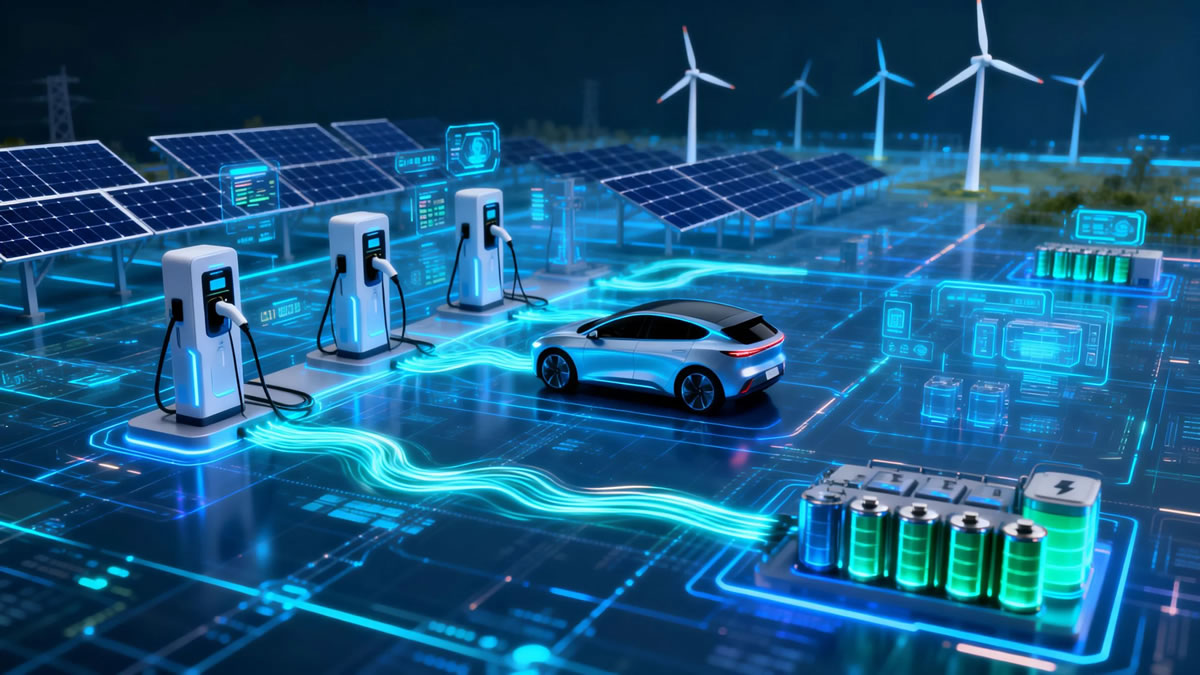
Solar and wind energy will be increasingly integrated into charging infrastructure, supported by energy storage systems that stabilize supply.
Charging demand may be aligned with periods of high renewable generation, improving efficiency and reducing emissions.
In this model, mobility and clean energy become deeply interconnected.
Vehicles as Energy Assets
Electric vehicles will no longer be passive consumers of electricity.
With the expansion of bidirectional charging technologies, vehicles may act as mobile energy assets.
They could:
- Store excess energy
- Support grid stability during peak demand
- Provide backup power in certain scenarios
This transforms the role of vehicles within the broader energy ecosystem.
Expansion into New Regions
While leading markets will continue to refine and optimize their networks, the most visible growth may occur in emerging regions.
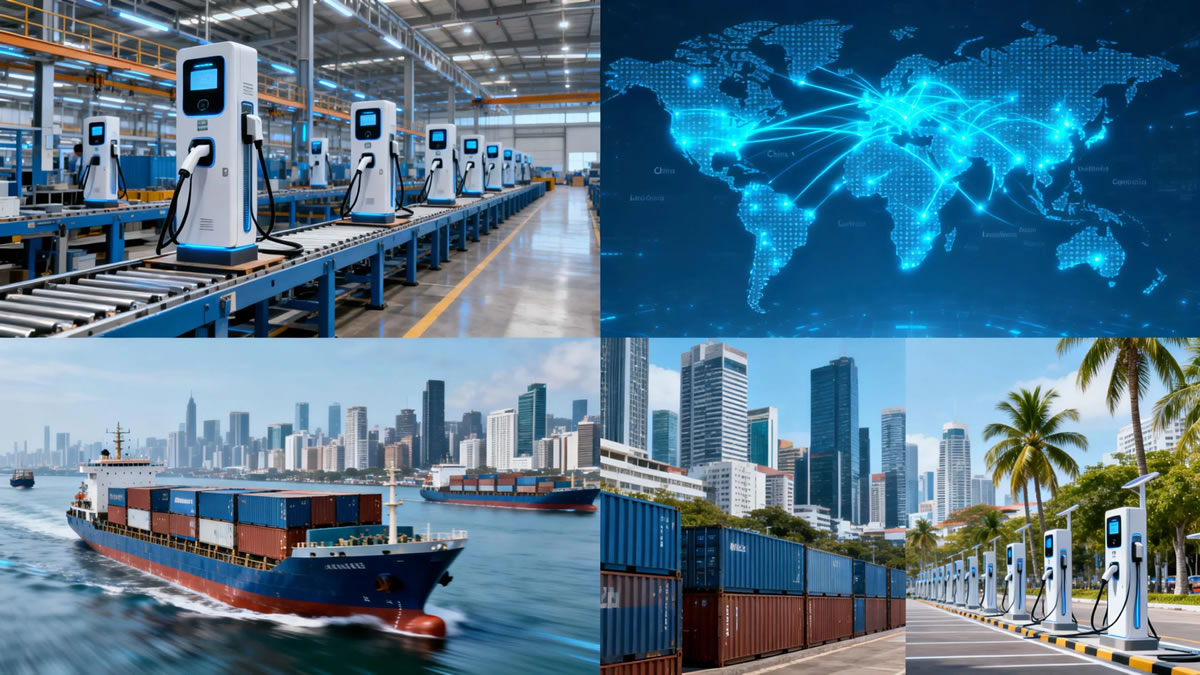
Latin America, Southeast Asia, and other developing markets are expected to expand their charging infrastructure rapidly, integrating modern technologies from the outset.
By 2030, the global charging network will be far more balanced — though still evolving at different speeds.
A New Layer of Everyday Life
Perhaps the most important change is not technological, but experiential.
Charging infrastructure will become a natural part of daily life — as common and unremarkable as Wi-Fi or electricity itself.
People will not think about it.
They will simply expect it to be there.
The System Behind the Transition
The global shift to electric mobility is often associated with vehicles, batteries, and emissions.
But beneath all of these elements lies a more fundamental transformation:
The creation of a new energy system.
Charging networks are at the center of this system.
They connect mobility with energy, infrastructure with data, and local demand with global trends.
By 2030, the world will not just have more electric vehicles.
It will have a new way of powering movement.
And that system is already being built — piece by piece, network by network.
 April 5, 2026